
In modern water supply and industrial systems, pump efficiency plays a critical role in determining energy consumption, operating costs, and long-term reliability. Among the many pump configurations available today, the vertical centrifugal pump is widely recognized for its space-saving design, strong suction performance, and high efficiency under the right operating conditions.
However, many users still ask an important question: How efficient are vertical pumps? The answer depends on pump design, system matching, hydraulic optimization, and maintenance practices. When properly selected and maintained, vertical centrifugal pumps can deliver outstanding efficiency and reliable performance across many applications.
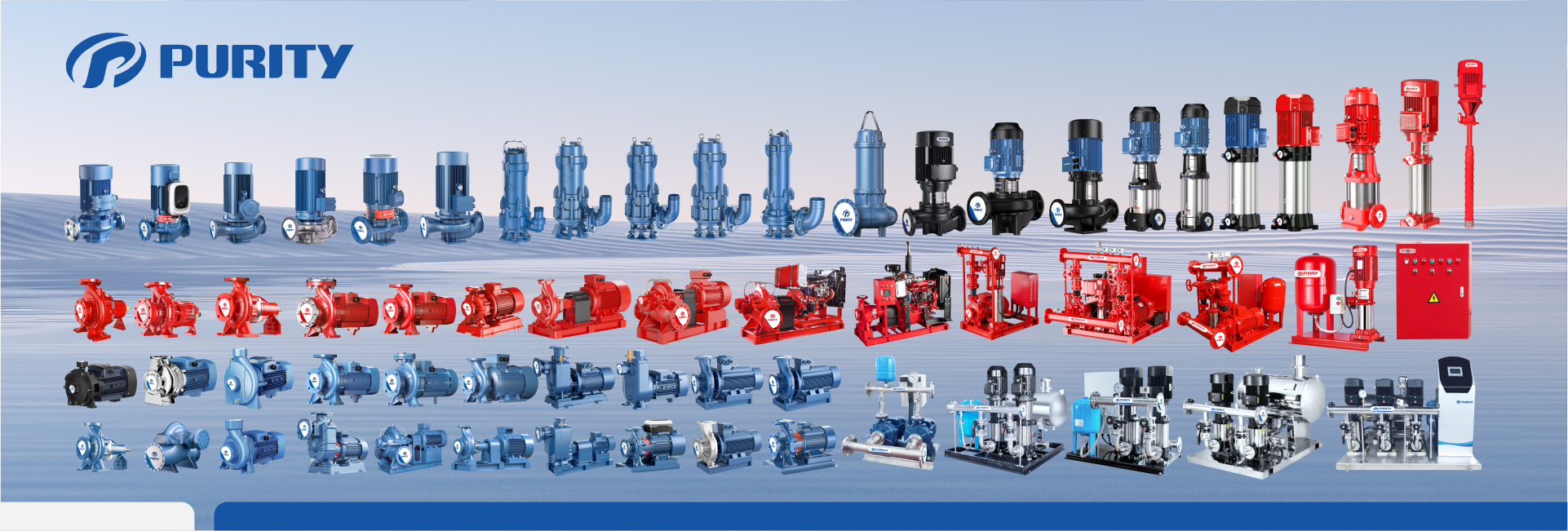 Picture | Purity’s family portrait
Understanding Vertical Centrifugal Pumps
A vertical pump centrifugal system operates using the same hydraulic principles as horizontal centrifugal pumps. The main difference lies in the structural arrangement: the motor is mounted above the pump, while the pump shaft and impeller are arranged vertically.
This vertical configuration allows pumps to operate effectively in situations where space is limited or where the liquid source is located below ground level. One common example is the vertical inline centrifugal pump, where the pump is installed directly into the pipeline without changing the direction of flow. This design simplifies piping systems and reduces installation space.
Because of these structural advantages, vertical pumps are commonly used in:
(1)Municipal water supply systems
(2)Industrial circulation systems
(3)Fire protection systems
(4)Cooling water circulation
(5)Deep well water extraction
(6)Water treatment plants
In these applications, vertical pump designs can provide excellent hydraulic performance and operational efficiency.
Typical Efficiency of Vertical Pumps
Under optimal conditions, the efficiency of vertical centrifugal pumps can be very high. In many industrial and municipal applications, pump efficiency can reach 70%–85%, depending on pump size and operating conditions.
Certain specialized vertical pump types can achieve even higher efficiency levels. For example:
(1)Vertical turbine pumps used in deep wells can reach efficiencies of 80%–90%.
(2)A multistage centrifugal pump designed for high-pressure systems can also maintain high efficiency due to optimized hydraulic staging.
These high efficiency levels make vertical pumps an attractive solution for systems that require continuous operation or high-pressure water delivery.
However, efficiency depends heavily on several technical factors.
Key Factors Affecting Vertical Pump Efficiency
1. Pump Type Selection
Choosing the correct pump type is the most important factor affecting efficiency.
Different vertical pumps are designed for different operating conditions:
(1)Vertical inline centrifugal pump – ideal for building water supply, HVAC systems, and booster stations
Multistage centrifugal pump – suitable for high-pressure systems such as boiler feed, fire protection, and industrial boosting
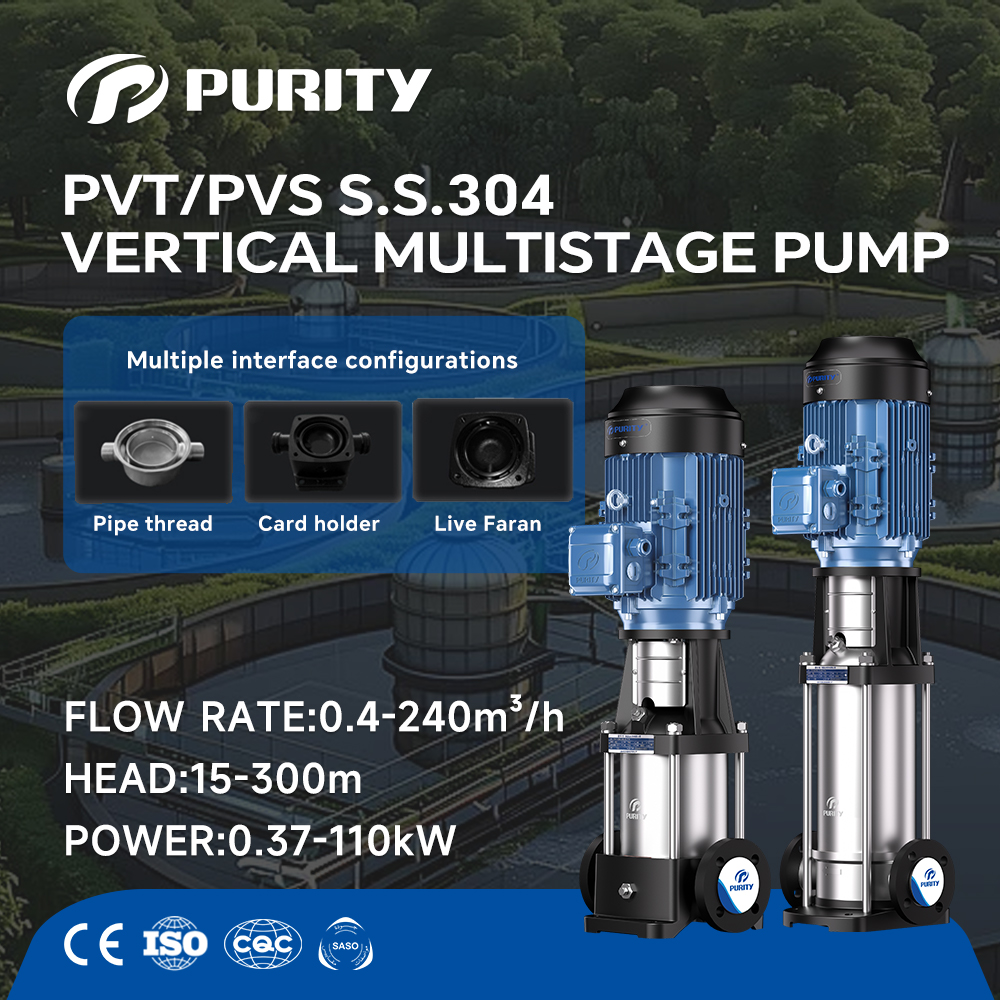
Picture | Purity Vertical Multistage Pump – PVT/S
(2)Vertical turbine pumps – commonly used for deep wells and large water transfer systems
When the pump type matches the system requirements for flow rate and head, efficiency can reach optimal levels.
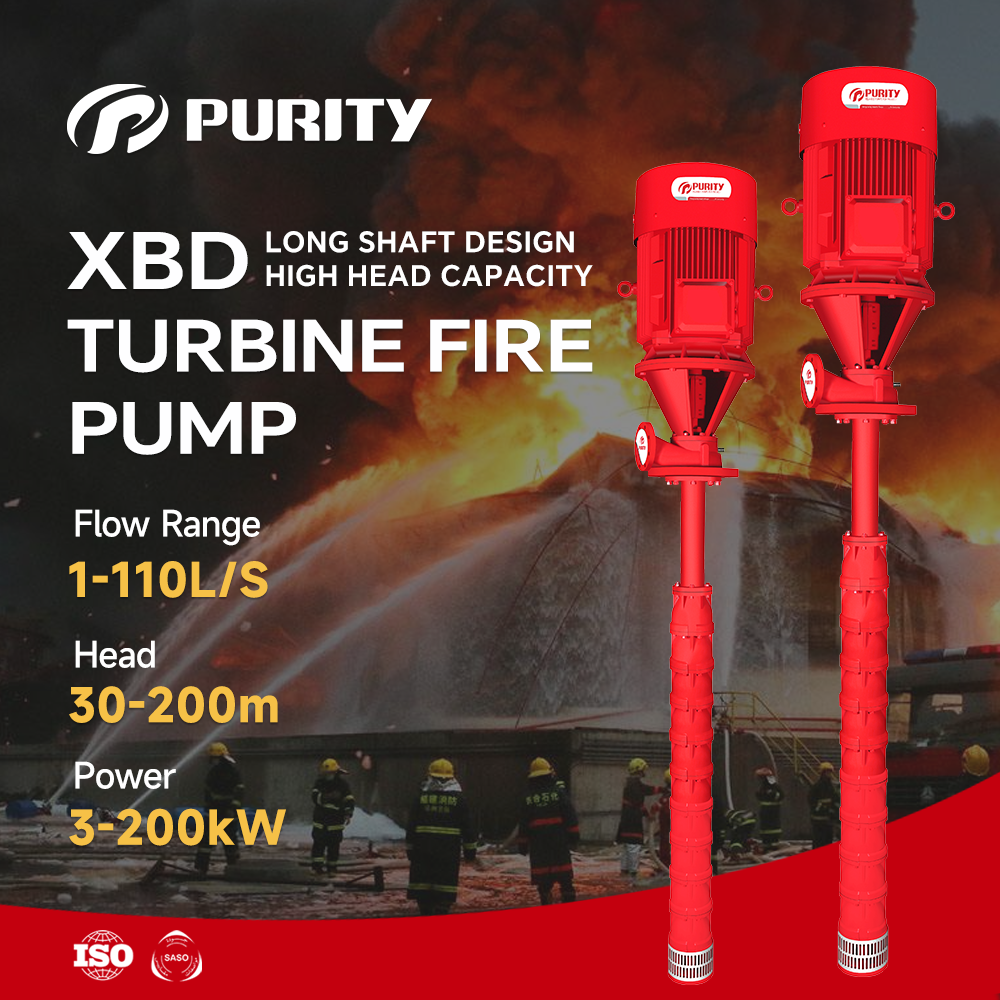
Picture|Purity XBD Vertical Turbine Pump
2. Hydraulic Design
Modern pump manufacturers use advanced hydraulic technologies to improve pump efficiency.
High-performance vertical pumps often include:
(1)CFD (Computational Fluid Dynamics) optimized impeller design
(2)Smooth internal flow passages to reduce friction loss
(3)Precision machining to minimize internal leakage
(4)Optimized diffuser and volute structures
These improvements may increase efficiency by 1–3%, which can translate into significant energy savings during long-term operation.
3. Material Quality
The materials used in pump construction also influence performance and durability.
High-quality pumps often utilize:
(1)Stainless steel impellers
(2)Corrosion-resistant pump casings
(3)Precision bearings and mechanical seals
These materials help maintain hydraulic accuracy over time and reduce efficiency losses caused by wear or corrosion.
4. Maintenance and Operation
Pump efficiency is not constant throughout the life cycle of a pump. Without proper maintenance, efficiency will gradually decline.
Common causes of efficiency loss include:
(1)Impeller wear
(2)Seal damage
(3)Bearing wear
(4)Increased internal clearances
Regular maintenance is essential to maintain pump efficiency. Recommended practices include:
(1)Shaft alignment checks
(2)Bearing lubrication
(3)Wear ring inspection
(4)Performance monitoring
Proper maintenance ensures that vertical centrifugal pumps continue operating near their designed efficiency levels.
Vertical Pumps vs Horizontal Pumps
Although vertical pumps offer many advantages, horizontal pumps are still widely used. The choice between the two often depends on application conditions.
Advantages of Vertical Pumps
Vertical pumps are often preferred when:
(1)Installation space is limited
(2)Suction conditions are difficult
(3)High head pressure is required
(4)Water sources are located underground
Their vertical structure also reduces footprint and can improve NPSH performance, reducing the risk of cavitation.
Advantages of Horizontal Pumps
Horizontal pumps remain common because they offer:
(1)Easier installation
(2)Simpler maintenance access
(3)More flexible piping arrangements
(4)Lower building height requirements
Because of these characteristics, horizontal pumps are widely used in general industrial systems.
Energy Efficiency and Long-Term Cost Savings
One of the biggest advantages of using high-efficiency vertical pumps is energy savings. Pumps often operate continuously in industrial or municipal systems, meaning even small efficiency improvements can significantly reduce electricity consumption.
A well-designed multistage centrifugal pump or vertical inline centrifugal pump can help reduce:
(1)Energy costs
(2)Operating expenses
(3)Lifecycle maintenance costs
Over time, this leads to improved system reliability and lower total ownership costs.
Why Choose Purity Pump?
When selecting a reliable pump manufacturer, product quality, technical capability, and manufacturing capacity are essential considerations.
Purity Pump provides a wide range of high-performance pump solutions, including:
(1)Vertical inline centrifugal pumps
(2)Multistage centrifugal pumps
(3)Vertical turbine pumps
(4)Industrial centrifugal pumps
Key advantages of Purity Pump include:
(1)Multiple vertical pump models to meet diverse application requirements
(2)Complete product specifications covering various flow rates, heads, and power ranges
(3)International certifications such as CE and ISO
(4)A modern manufacturing facility covering 60,000 square meters with more than 320 employees
With years of experience in pump manufacturing and global exports, Purity Pump products are widely used in municipal, industrial, and building service systems.
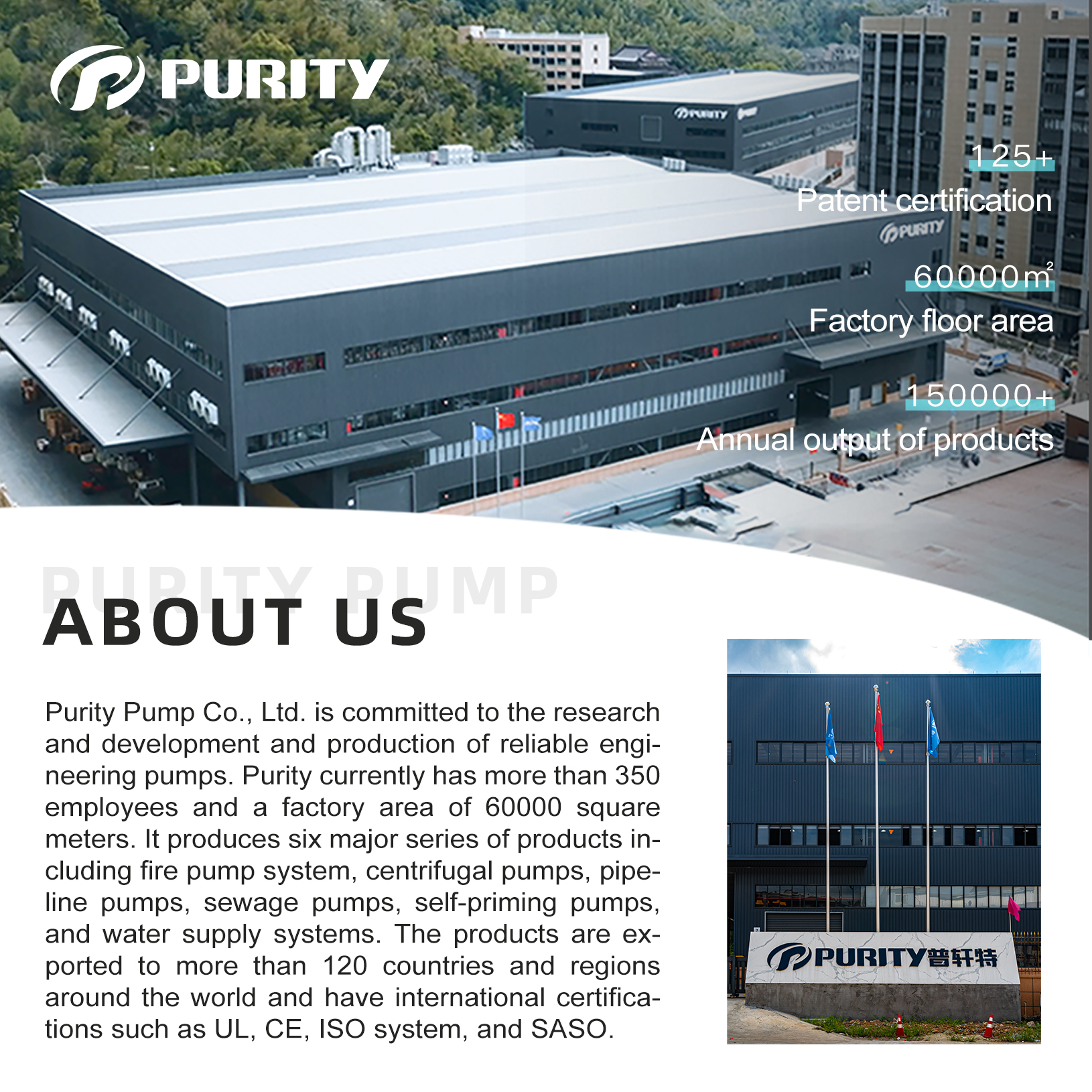
Picture| Introduction to Puxuante
Conclusion
So, how efficient are vertical pumps? The answer depends on system design and proper pump selection.
When correctly matched to the application, vertical centrifugal pumps can achieve excellent efficiency, strong suction performance, and significant space savings. They are particularly advantageous in deep well pumping, high-pressure supply systems, and installations with limited space.
Ultimately, there is no universally “best” pump type. The most efficient pump is always the one that best matches the system’s flow, head, installation conditions, and maintenance capabilities.
For many modern water systems, however, the vertical centrifugal pump remains one of the most efficient and reliable pumping solutions available today.
Post time: Mar-07-2026


