
Split case pumps have become an essential component in municipal, industrial, and commercial fluid handling applications due to their durability, high efficiency, and ease of maintenance. A split case centrifugal pump is designed with a casing split axially into two halves, which allows operators to access the impeller, bearings, and seals without disturbing the pump alignment. This unique design offers numerous operational advantages, making split case pumps a preferred choice for high-flow, high-pressure applications.
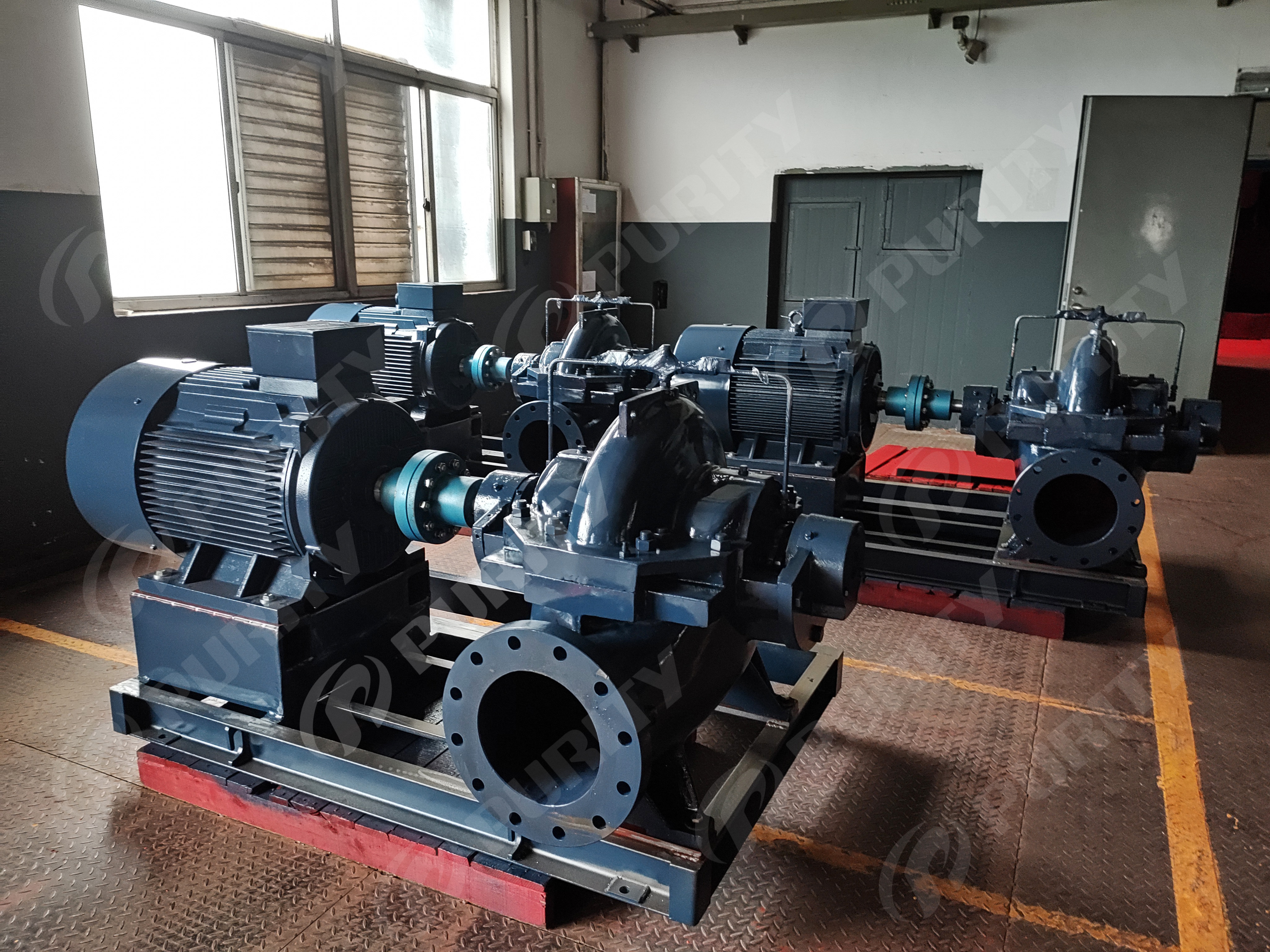
Picture | Purity PSCM Double Suction Split Case Pump
Types of Split Case Pumps
Split case pumps are available in several configurations to meet diverse operational requirements. The most common type is the horizontal split case centrifugal pump, where the casing is split along the horizontal plane. This design is widely used for water, chemicals, petroleum, pulp, and wastewater applications due to its accessibility and robust construction.
For installations with limited floor space, a vertical configuration—known as a vertical split case pump—can be used. These pumps maintain all the benefits of split casing while occupying less horizontal space.
Another widely used variant is the double suction split case centrifugal pump, which features a dual-inlet impeller. This design balances axial thrust, improves suction performance, and allows reliable operation under high-flow conditions, making it ideal for large-scale industrial and municipal applications.
Advantages of Split Case Pumps
1. Ease of Maintenance
One of the key advantages of a split case centrifugal pump is its easy maintenance. The axially split casing allows quick inspection of internal components, including the impeller, bearings, and mechanical seals, without removing the pump from its piping system. This design significantly reduces downtime and maintenance costs.
The Purity PSC double suction split case pump exemplifies this advantage. Its mid-split casing allows convenient disassembly and inspection, and component replacement does not affect the alignment of the pump body or inlet/outlet piping.
2. High Flow and Pressure Handling
Split case pumps are engineered to deliver large volumes of fluid at relatively high pressures. They are commonly used in boiler feed systems, fire protection, industrial water transfer, and municipal water distribution. The double suction design of pumps like the Purity PSC ensures excellent suction performance and maintains high suction lift even under large-flow conditions.
3. Robust Construction
Centrifugal split case pumps are typically constructed from durable materials such as cast iron or stainless steel. This ensures resistance to wear, corrosion, and challenging operating conditions. Purity PSC pumps provide stable and quiet operation, making them suitable for handling water, wastewater, chemicals, petroleum products, and abrasive slurries.
4. Flexibility and Customization
Split case pumps can be installed in horizontal or vertical orientations and offer flexible options for pump casing, drive type, and sealing systems. This versatility allows operators to tailor pumps for specific applications ranging from municipal water supply to chemical processing and mining operations.
5. Low NPSH Requirements
Split case pumps generally require a low net positive suction head (NPSH), enabling reliable performance in challenging inlet conditions, including high-temperature liquids, suction lift scenarios, and liquids containing vapor. This ensures consistent operation even in demanding applications.
6. High Reliability and Long Service Life
The conservative design of split case pumps, combined with high-quality materials and ample internal clearances, ensures high reliability and long mean time between failures (MTBF). Proper selection and routine maintenance can guarantee stable operation for years, reducing the need for frequent repairs or overhauls.
7. Cost-Effectiveness Over the Pump Lifecycle
Although the initial investment in a split case centrifugal pump may be higher than other pump types, its long-term efficiency, durability, and ease of maintenance reduce overall lifecycle costs. Minimal downtime and extended service life make split case pumps a cost-effective solution for both municipal and industrial applications.
Typical Applications
Split case pumps are widely used across various sectors, including:
(1)Municipal Water and Wastewater: Water supply, sewage pumping, irrigation, and treatment plant transfers.
(2)Fire Protection Systems: High-pressure water supply for fire suppression.
(3)Industrial Processes: Petrochemical plants, pulp and paper mills, mining, and metallurgy.
(4)Power Generation: Boiler feed systems, cooling water circulation, and condensate recovery.
The Purity PSCM double suction split case centrifugal pump combines the benefits of high efficiency, quiet operation, excellent suction performance, and easy maintenance, making it an ideal solution for demanding industrial and municipal environments.
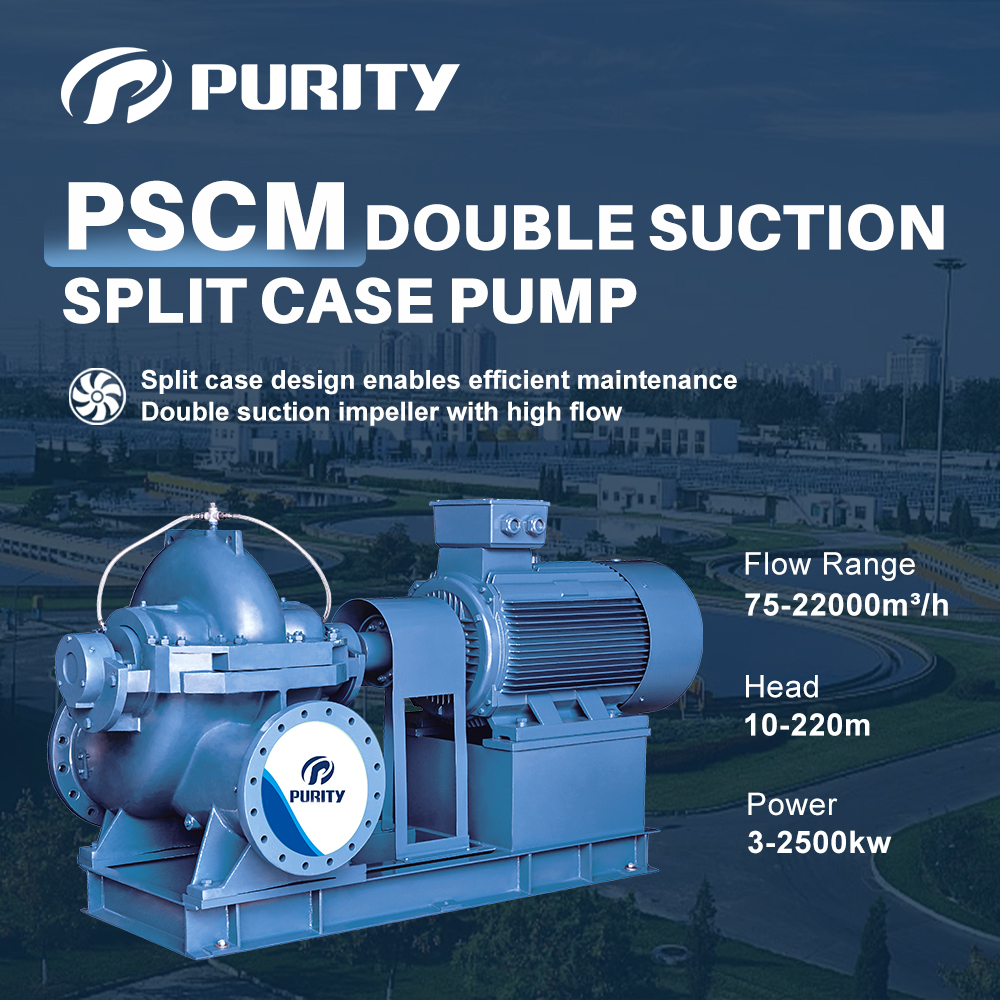
Picture | Purity PSCM Double Suction Split Case Pump
Conclusion
In summary, whether it is a horizontal split case centrifugal pump, axially split centrifugal pump, or double suction split case centrifugal pump, split case pumps offer high efficiency, durability, flexibility, and ease of maintenance. Products like the Purity PSC pump enhance these advantages with a double suction design, mid-split casing, and quiet operation. Proper selection and maintenance ensure long-term reliability and lower total lifecycle costs, making split case pumps the preferred choice for municipal, industrial, and commercial liquid handling applications.
As an industrial pump manufacturer with 15 years of experience, Purity products hold international CE, ISO, and SASO certifications and are exported to over 130 countries worldwide. We are actively seeking global agents—interested partners are encouraged to contact us today.
Post time: Jan-09-2026

