
Counterfeit and low-quality water pumps can be difficult to identify at first glance. Some products may copy a brand’s appearance, packaging, or nameplate, while refurbished pumps may be sold as new.
To identify a genuine water pump, check the nameplate, model and serial number, component markings, specifications, certifications, documentation, and supplier information. When possible, verify the product directly with the manufacturer or an authorized supplier.
Important: No single visual feature can prove that a water pump is genuine. A reliable check should combine product inspection with manufacturer and documentation verification.
1. Check the Water Pump Nameplate
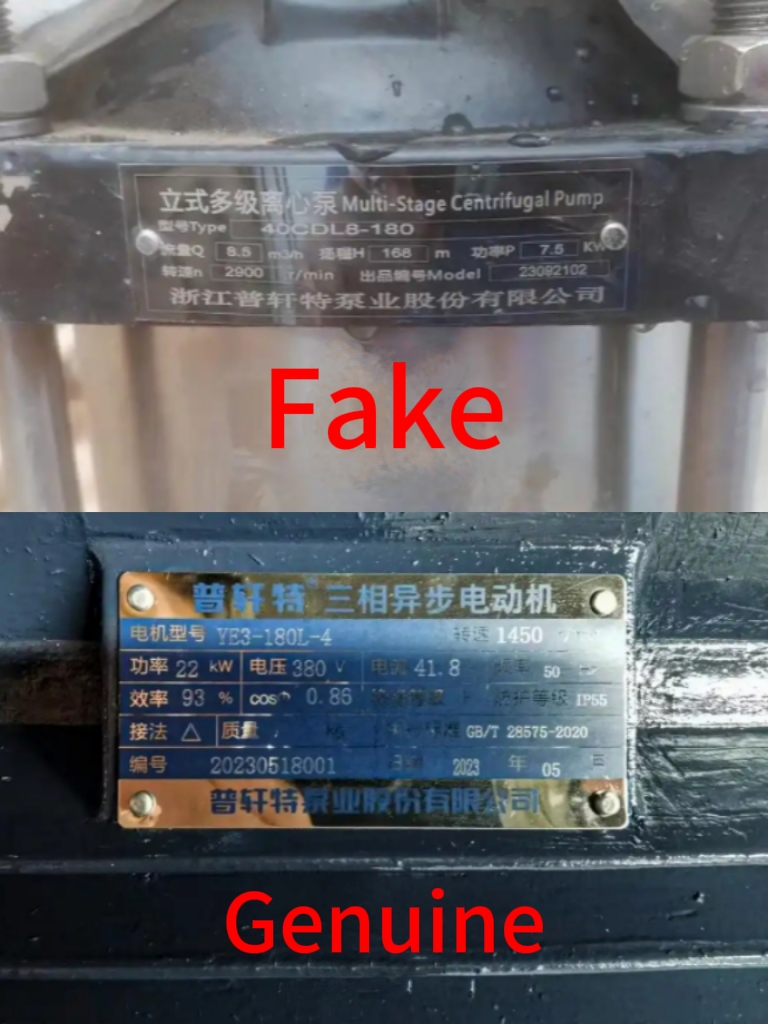
Picture | Incomplete Fake vs Complete Genuine Nameplate
The nameplate is one of the first things to check. A genuine manufacturer’s nameplate should provide clear and consistent information, such as the brand name, product model, rated flow, head, motor power, voltage, frequency, and identification details.
Compare the nameplate with the product datasheet, quotation, and purchase order. Missing manufacturer information, incomplete specifications, inconsistent model numbers, or poor-quality printing can be warning signs.
However, a professional-looking nameplate alone does not prove authenticity because counterfeit products can also copy genuine nameplates.
2. Inspect the Pump’s Appearance
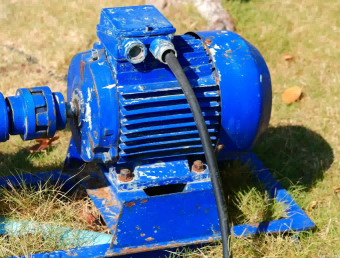
Picture | Paint peeling
The pump’s appearance can provide clues about manufacturing quality, although it should not be the only authenticity check.
Inspect the casing, paint finish, casting surface, machining areas, bolts, and flanges. Pay attention to:
(1)Uneven or peeling paint
(2)Corrosion around corners
(3)Rough casting surfaces
(4)Poor machining
(5)Damaged or mismatched components
(6)Signs of previous installation
Refurbished pumps may be cleaned and repainted to appear new. However, paint damage alone does not prove that a pump is counterfeit because transportation and storage can also affect its appearance.
3. Verify Model and Component Markings
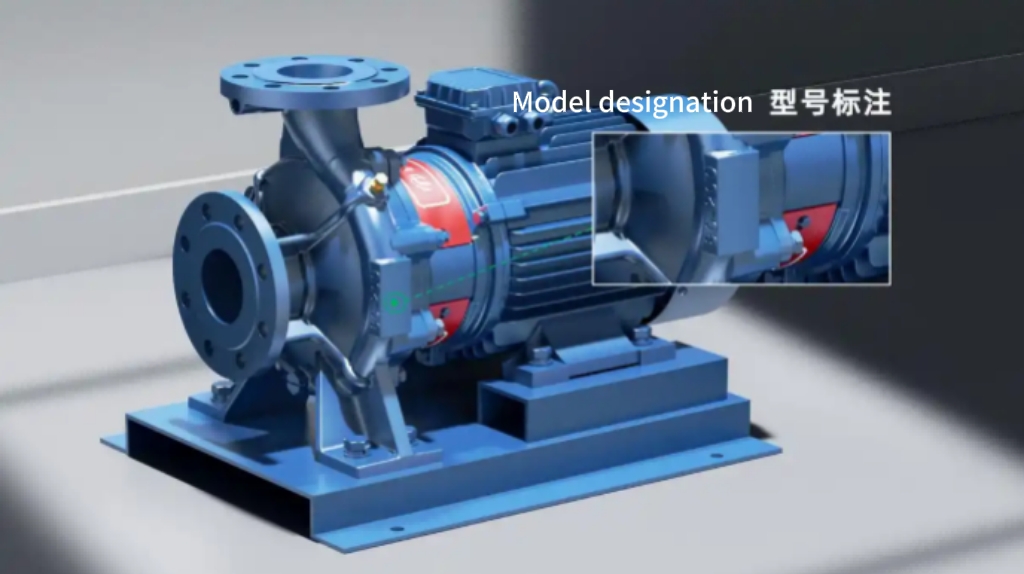
Figure | Product model labeling
Regular pump manufacturers use standardized model numbers and identification marks. Check the markings on the pump casing, motor, impeller, shaft, coupling, and other major components.
The model and size should match the nameplate and technical documents. If the markings are inconsistent, ask the supplier for clarification before installation or operation.
4. Compare Product Specifications
A genuine water pump should not only look correct; its technical specifications should also match the ordered product.
Compare the nameplate with the datasheet and purchase documents, especially:
(1)Flow rate
(2)Head
(3)Motor power
(4)Voltage and frequency
(5)Speed
(6)Connection size
(7)Materials
This is particularly important for industrial pumps because two products can have similar appearances but very different hydraulic performance.
5. Verify the Manufacturer and Supplier
Product inspection is only part of the verification process. You should also check who manufactured the pump and who is selling it.
Before purchasing, ask:
(1)Does the manufacturer have an official website?
(2)Does the company information match the product documents?
(3)Can the manufacturer be contacted directly?
(4)Can the supplier provide technical documentation?
(5)Is the supplier an authorized or verifiable sales channel?
For industrial pump purchases, also consider manufacturing capability, quality control, spare parts, technical support, and after-sales service.
6. Check Certifications and Test Documents
Depending on the pump and application, manufacturers may provide certificates, inspection records, test reports, or other technical documents.
These may include:
(1)Product test reports
(2)Factory inspection records
(3)Certificates of conformity
(4)Applicable product certifications
(5)Technical datasheets
(6)Installation manuals
Always check that the documents correspond to the actual manufacturer and pump model. A certificate alone does not prove that every product sold by a supplier is genuine.
7. Check the Manual and Warranty
A professional manufacturer should provide appropriate technical documentation and after-sales support.
Check whether the supplier provides an operation manual, maintenance information, warranty terms, spare parts information, and technical support.
The manual should clearly identify the manufacturer and correspond to the actual pump model. For industrial applications, reliable after-sales support is important because unavailable spare parts or technical assistance can lead to unexpected downtime.
Genuine vs. Fake Water Pumps: What Should You Check?
Before buying a water pump, use this simple checklist:
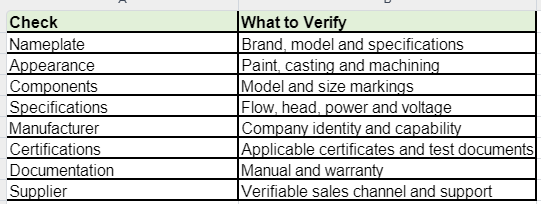
The more critical the application, the more carefully the product and supplier should be verified. Do not rely on price or appearance alone.
How Can I Check if a Water Pump Is Genuine?
The most reliable approach is to combine product inspection with manufacturer verification. Check the nameplate, model and serial number, specifications, component markings, documentation, and supplier information. When possible, contact the manufacturer directly to confirm the product.
How Can I Avoid Buying a Counterfeit Industrial Pump?
Buy through a verifiable manufacturer or authorized supplier. Compare the pump’s nameplate and specifications with the technical documentation, verify applicable certifications, and confirm the manufacturer’s identity before placing an order.
Looking for a Reliable Industrial Pump Manufacturer?

Picture|Purity Factory
Purity Pump has more than 16 years of pump manufacturing experience, with a 60,000㎡ manufacturing facility and products supplied to customers in more than 140 countries.
Its product portfolio includes centrifugal pumps, fire pump systems, sewage pumps, booster systems, and other water supply solutions.
Contact Purity for professional pump solutions and technical support.
Post time: Nov-03-2023

