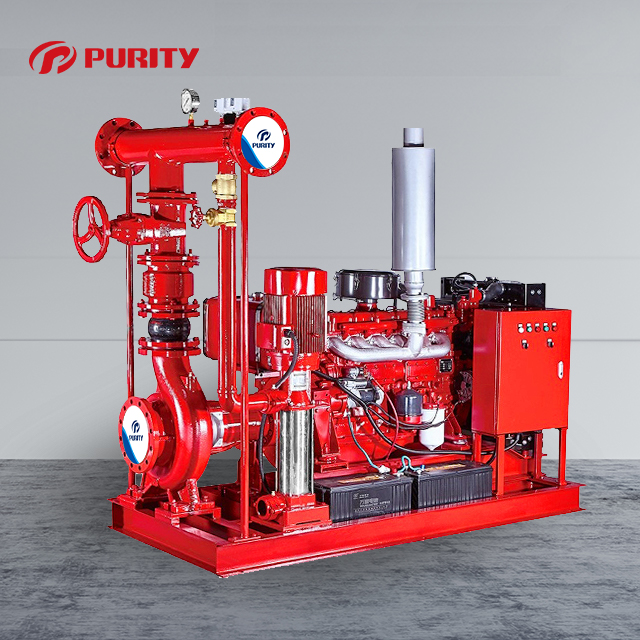
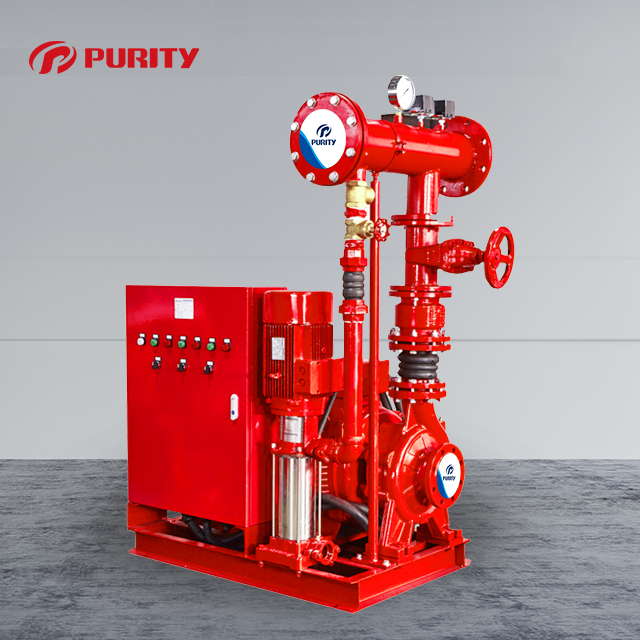
A fire pump system is a critical part of modern fire protection infrastructure, designed to ensure that sprinkler systems receive sufficient water pressure during emergencies. Among different types of systems, the diesel fire pump (fire pump) is widely used because it operates independently from the electrical grid, making it highly reliable during power failures.
Understanding how to properly test a fire fighting pump is essential not only for compliance but also for ensuring real-world emergency performance.
1. Why Diesel Fire Pump Testing Is Essential
A fire water pump is responsible for boosting water from external sources such as tanks, reservoirs, or municipal supplies into a building’s fire protection system. If the pump fails, the entire sprinkler system may become ineffective.
This is why regular testing is required under NFPA 25 standards. Testing ensures that every fire pump can start quickly, maintain stable pressure, and deliver sufficient water flow when needed most.
2. NFPA 25 Standard Testing Framework
All fire pump manufacturers design equipment that must follow standardized inspection and testing procedures. NFPA 25 defines a structured system that includes:
Weekly or Monthly: No-flow (Churn) Test
Annually: Full Flow Performance Test
Every Five Years: Detailed inspection and internal evaluation
This layered approach ensures continuous monitoring of system health and prevents unexpected failures.
3. Weekly/Monthly Churn Test (No-Flow Test)
The churn test is used to verify the basic operational readiness of a diesel fire pump. It is performed without water discharge and focuses on engine and system stability.
Key steps include:
Starting the fire pump automatically or manually
Running the system for 10–30 minutes
Monitoring engine speed, oil pressure, water temperature, and battery voltage
Checking for abnormal vibration, noise, or overheating
Verifying alarm functions such as low fuel or low oil pressure
This test ensures that the fire fighting pump is always ready to respond immediately in an emergency.
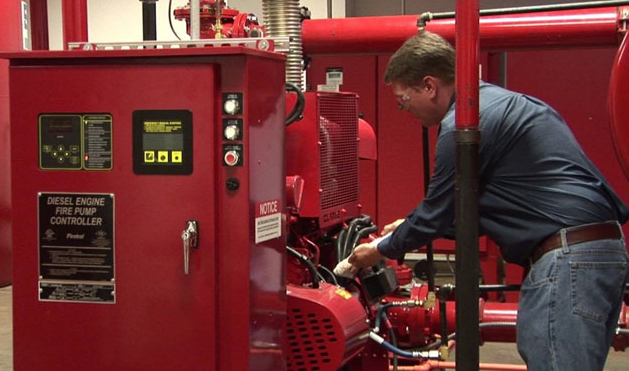
Picture | Testing Diesel Fire Pump
4. Annual Flow Test (Performance Verification)
The annual flow test is the most important performance evaluation for a fire water pump. Unlike the churn test, it measures actual hydraulic output under working conditions.
The process includes:
Connecting calibrated flow testing equipment
Running the pump at 0%, 100%, and 150% load conditions
Measuring suction pressure, discharge pressure, and flow rate
Comparing results with manufacturer pump performance curves
This test ensures that the fire pump meets its rated capacity and can overcome system resistance. It also helps identify issues such as clogged pipes, worn impellers, or reduced efficiency.
5. Importance of Different Pump Types
Different fire protection systems use different pump technologies:
Diesel fire pump: Independent operation, ideal for emergency backup systems
Electric fire pump: Stable operation, commonly used in municipal power systems
Integrated fire pump systems: Combine multiple pumping functions for optimized performance
Although designs differ, all systems must follow the same principle: regular testing ensures reliability.
6. Advantages of Purity PEEJ Fire Pump System
Modern fire protection systems are evolving toward integrated and energy-efficient solutions. The Purity PEEJ fire pump unit is designed to improve both performance and usability.
Key advantages include:
Integrated design for easy installation: Pre-assembled structure reduces installation time and simplifies maintenance
Energy-efficient operation: Combines small pressure stabilization pumps with high-power main pumps for optimized energy use
Stable pressure output: Advanced hydraulic design ensures consistent system pressure and reliable operation
Simplified maintenance: Modular structure allows easier inspection and component replacement
Compared with traditional fire pump systems, the PEEJ unit offers higher efficiency, better stability, and reduced maintenance workload, making it suitable for modern commercial and industrial applications.
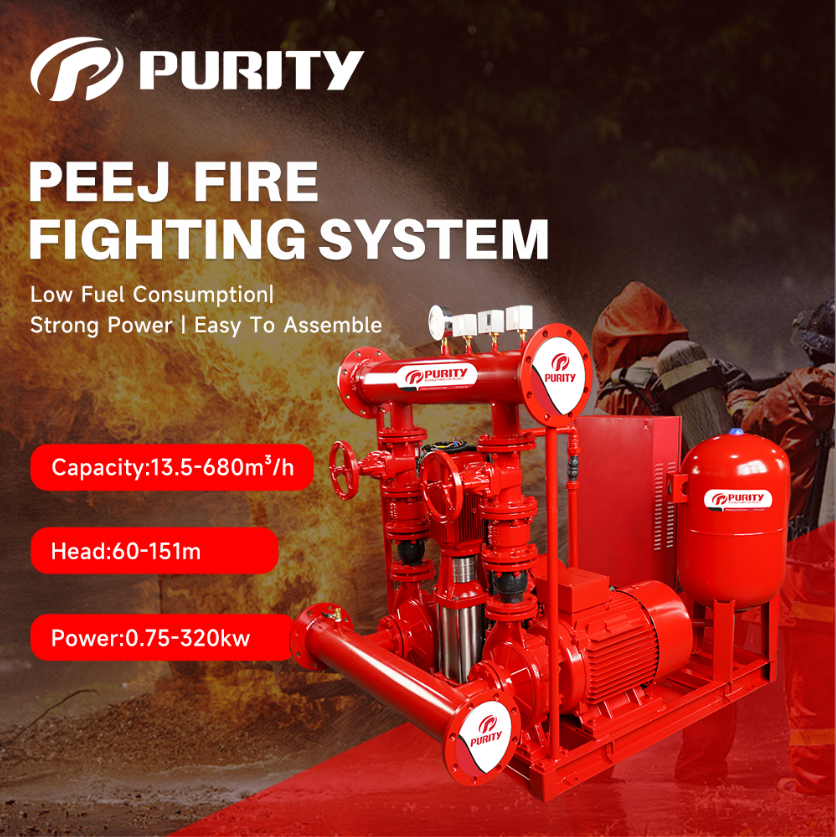
Picture | PEEJ Fire Pump System
7. Common Issues Found During Testing
Regular testing of a fire fighting pump often reveals potential problems such as:
Engine startup delay or failure
Low battery voltage or charging system issues
Insufficient pressure output
Fuel or cooling system leakage
Alarm system malfunction
Pipeline blockage or valve restriction
Early detection of these issues helps prevent system failure during real emergencies.
Conclusion
Testing a diesel fire pump is a critical requirement for maintaining fire safety system reliability. Whether it is a fire pump, fire fighting pump, or fire water pump, all systems must follow NFPA 25 testing standards to ensure consistent performance.
Modern solutions like the Purity PEEJ fire pump unit further enhance system efficiency through integrated design, energy optimization, and simplified maintenance.
Ultimately, fire pump reliability depends on three key factors: proper system design, regular testing, and advanced equipment integration—ensuring maximum safety protection when it matters most.
Post time: Apr-30-2026