An AC electric motor converts electrical energy into mechanical motion using alternating current (AC) and magnetic fields. It powers everyday appliances, industrial machinery, and water pumps. But how does an AC electric motor work, and what makes it suitable for continuous industrial operation?
Most industrial AC motors use electromagnetic induction to produce rotation. Understanding their main components, operating principles, and speed control methods can help you select the right motor for your application.
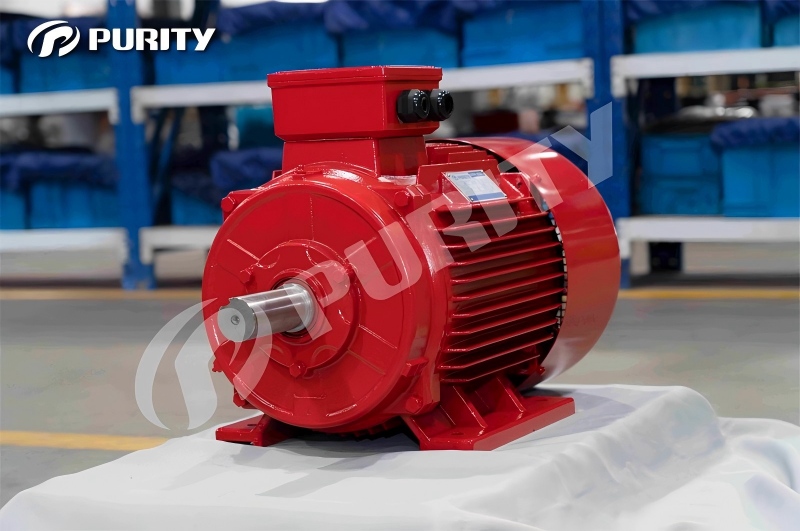
Picture|Purity YE3 Electric Motor
1. Main Parts of an AC Electric Motor
An AC induction motor consists of several essential components that work together to generate rotation.
(1)Stator: The stationary part, containing laminated steel cores and insulated copper windings. When AC flows through the windings, it produces a magnetic field.
(2)Rotor: The rotating component inside the stator. In a squirrel-cage induction motor, conductive bars connected by end rings allow current to flow through the rotor.
(3)Shaft and bearings: The shaft transfers mechanical power to the connected equipment, while bearings support the rotating assembly and reduce friction.
(4)Motor housing: The enclosure protects internal components and provides structural support.
(5)Cooling fan: Many industrial motors use a fan to dissipate heat and maintain an appropriate operating temperature.
(6)Terminal box: This provides the electrical connections between the motor windings and the power supply.
Together, these components enable an AC electric motor to convert electrical energy into usable mechanical power.
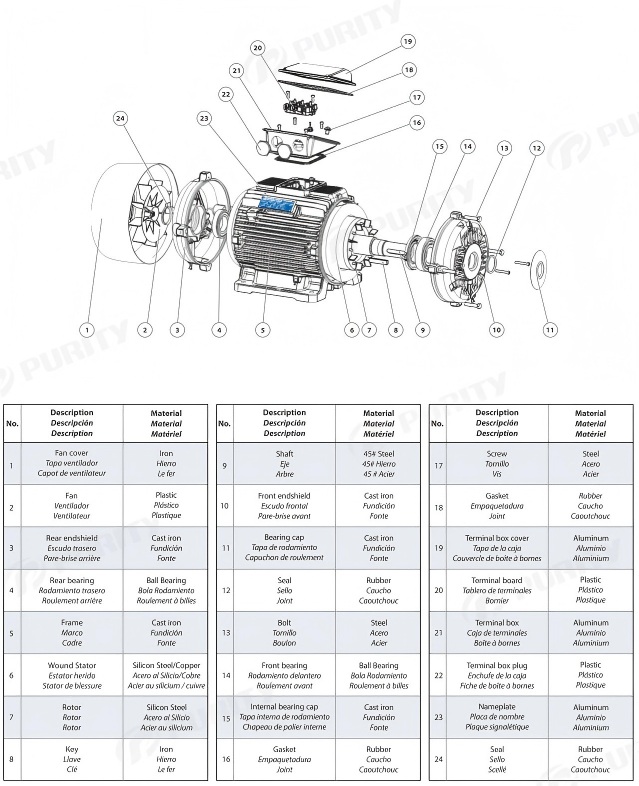
Picture|Purity YE3 Electric Motor Component
2. How Does an AC Induction Motor Work?
An AC induction motor works through electromagnetic induction. Its operation can be explained in four steps.
Step 1: AC energizes the stator. When alternating current flows through the stator windings, it generates a changing magnetic field. In a three-phase motor, the windings are arranged to create a rotating magnetic field.
Step 2: The magnetic field induces rotor current. As the rotating magnetic field passes the rotor conductors, it induces an electrical current in them. The rotor does not normally need a separate electrical power connection.
Step 3: Magnetic forces produce torque. The induced rotor current creates its own magnetic field. The interaction between the stator’s rotating field and the rotor’s magnetic field generates torque, causing the rotor to turn.
Step 4: The shaft drives the load. The rotating shaft transfers mechanical power to equipment such as a centrifugal pump, fan, or compressor.
The rotor must rotate slightly slower than the rotating magnetic field in a conventional induction motor. This difference, known as slip, allows current to continue being induced in the rotor and torque to be produced.
3. What Determines AC Motor Speed?
The synchronous speed of an AC motor depends on the supply frequency and the number of magnetic poles.
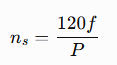
Where:
nsn_sns = synchronous speed (RPM)
fff = supply frequency (Hz)
PPP = number of motor poles
For example, a four-pole motor operating at 50 Hz has a synchronous speed of 1,500 RPM. An induction motor’s actual operating speed is slightly lower because of slip.
A variable frequency drive (VFD) adjusts the supply frequency to control motor speed. This is particularly useful in industrial pump systems, where flow and pressure requirements may vary.
4. Where Are AC Electric Motors Used?
AC electric motors are widely used in residential, commercial, and industrial applications.
(1)Household appliances: Washing machines, air conditioners, and other appliances.
(2)Power tools: Drills, saws, and workshop equipment.
(3)Industrial machinery: Fans, compressors, conveyors, and production equipment.
(4)Water supply systems: Centrifugal pumps, booster pumps, and other water-handling equipment.
For industrial water pumps, the motor must provide sufficient power while operating reliably under the required load and working conditions. Motor selection should consider power, speed, voltage, efficiency, and the pump’s operating requirements.
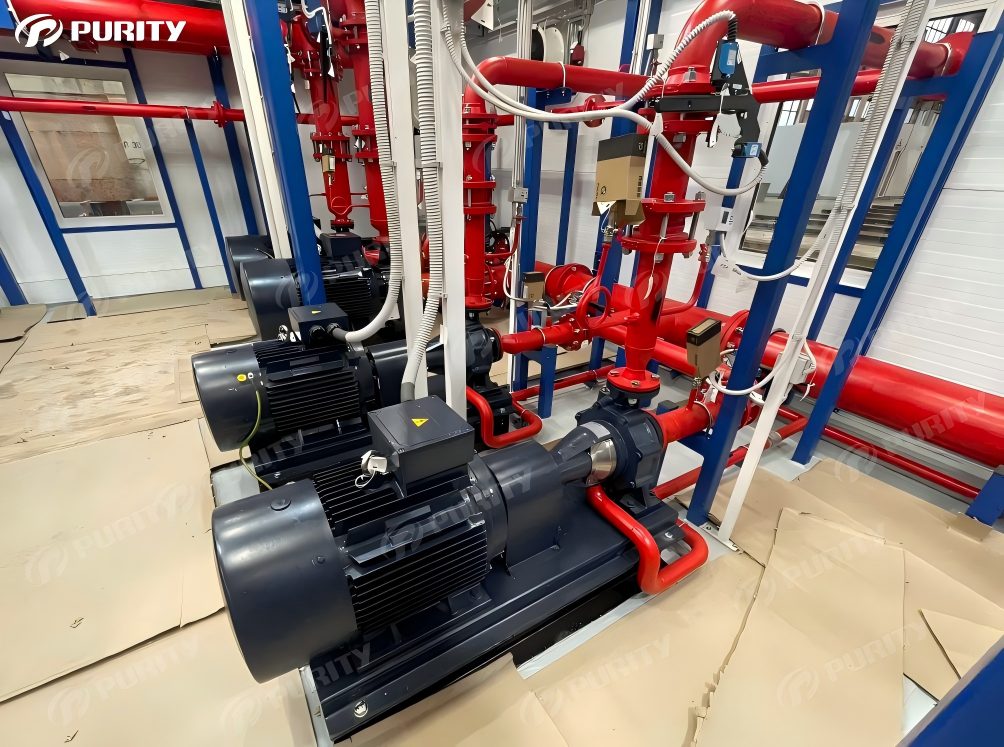
Picture|Purity YE3 Electric Motor Project Application
5. Advantages of AC Induction Motors
AC induction motors are widely used because of their relatively simple construction, reliable operation, and low routine maintenance requirements. Squirrel-cage designs have no brushes or commutators, reducing the need for frequent component replacement.
They are also available in a wide range of power ratings and can support continuous industrial operation when properly selected and maintained.
However, actual efficiency depends on motor design, load, and operating conditions. Precise speed control may require a VFD, which adds equipment cost and introduces additional system considerations.
6. Why Choose Purity YE3 AC Electric Motors?
Purity manufactures YE3 series three-phase AC electric motors for industrial applications, including pump systems. With IP55 protection, these motors are designed to help protect against dust and water ingress under specified conditions.
Features such as reinforced bearing support, shaft protection, and a cooling fan help support stable operation and heat dissipation. Selecting the appropriate motor rating and installation configuration is essential for reliable performance.
With over 16 years of industry experience, a 60,000 m² manufacturing footprint, and products serving more than 140 countries, Purity provides industrial pump and motor solutions for a wide range of applications.
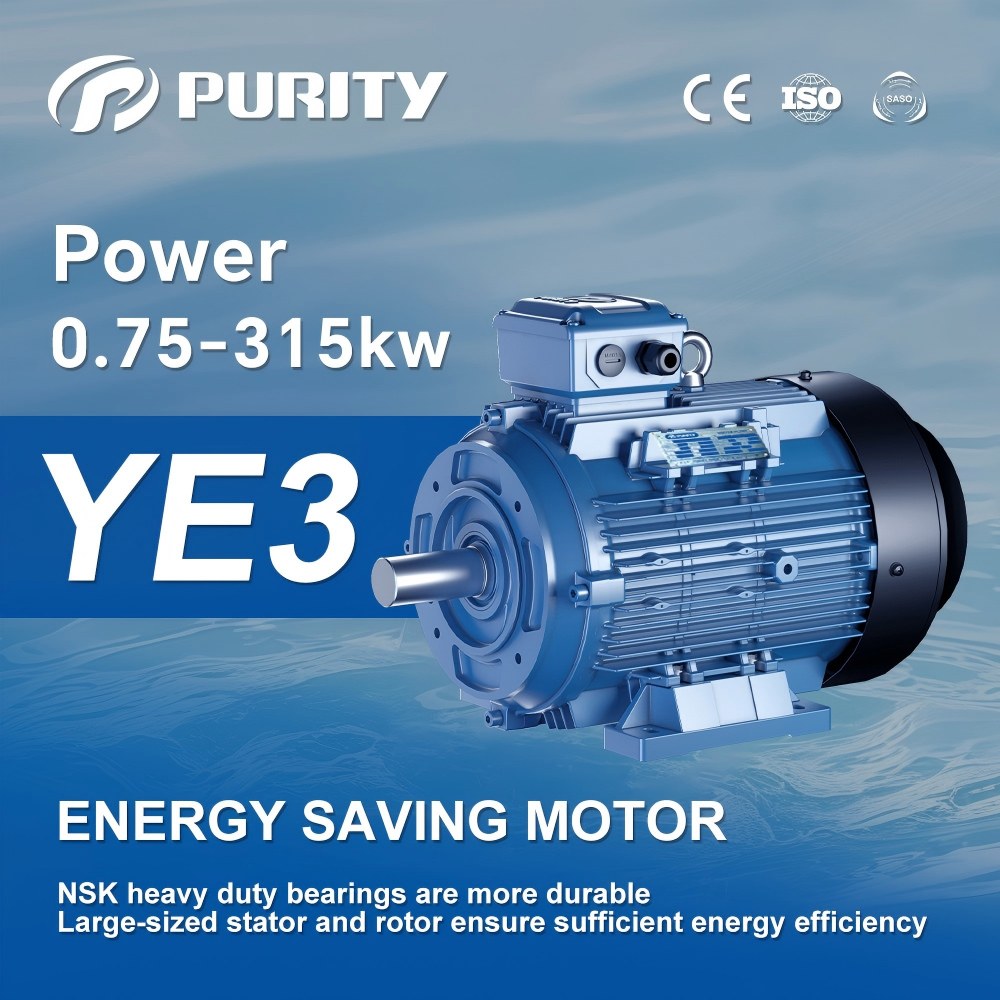
Picture|Purity YE3 Electric Motor
Conclusion
An AC electric motor converts electrical energy into mechanical power through magnetic fields. In an induction motor, the stator creates a rotating magnetic field that induces current in the rotor, producing torque and shaft rotation.
Understanding motor components, speed, and operating requirements helps you select a suitable solution for industrial pumps and other machinery. Explore Purity YE3 AC electric motors to find a motor solution for your application.
Post time: Aug-15-2025