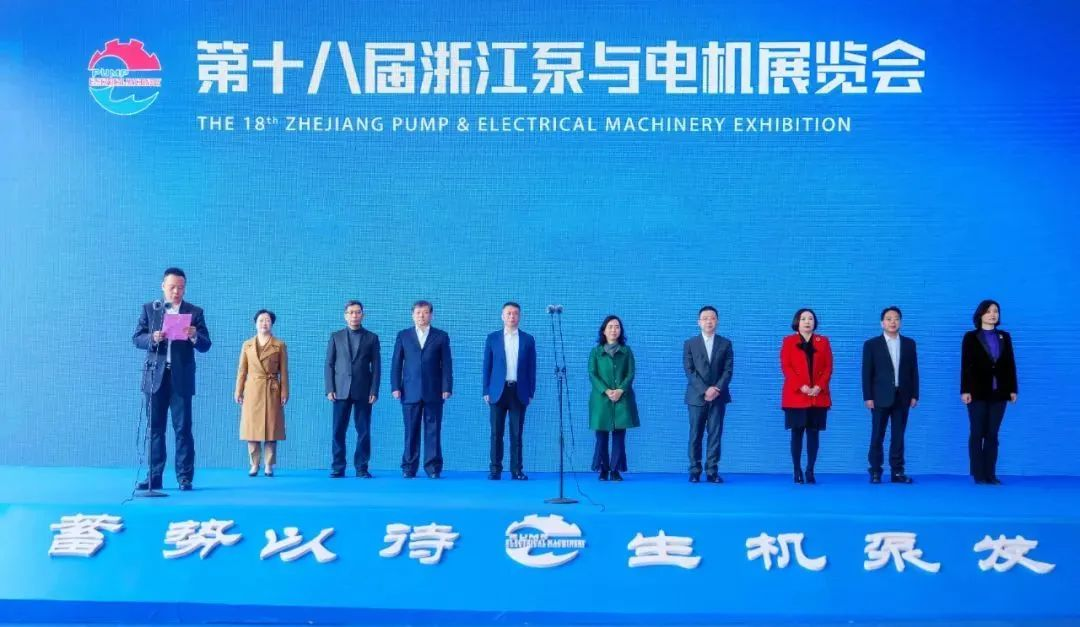
Choosing an industrial pipeline pump can be challenging for beginners. Focusing only on motor power or price may lead to the wrong choice. This guide covers practical tips to help you select the right pump for your application with confidence.
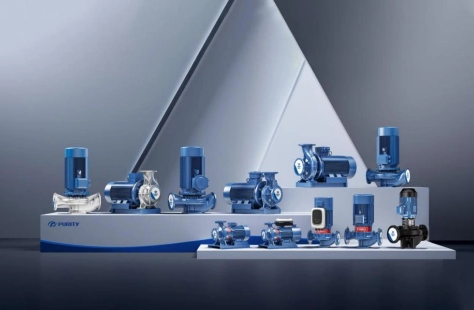
Picture|Purity Pipeline Centrifugal Pump Series
Step 1: Define Your Operating Requirements
Choosing a pump is not about selecting the model with the highest specifications. The key is matching the pump to your actual operating conditions. Start by identifying two essential parameters: flow rate and head.
1. Flow Rate (Q)
Flow rate refers to the volume of liquid a pump delivers per hour, usually measured in m³/h. Determine your normal, maximum, and minimum requirements, and allow a 10%–15% margin for changing operating conditions.
For example, if the maximum required flow rate is 200 m³/h, consider a pump rated at 220–230 m³/h. Avoid excessive margins, as they can reduce efficiency, increase energy consumption, and accelerate wear.
2. Head (H)
Head refers to the pump’s ability to overcome elevation differences and pipeline resistance. Longer pipelines, more elbows, and greater lifting heights require higher head. Allow a 10%–20% margin after calculating the required head to ensure reliable operation.
Simply put, flow rate determines how much liquid is delivered, while head determines how far it can be pumped.
Step 2: Understand Your Pumping Medium
Different liquids require different pump designs. Before choosing a centrifugal pump, carefully evaluate the physical and chemical properties of the medium.
1. Physical Properties
- Viscosity: Thick liquids such as oil and slurry are better suited to screw pumps or gear pumps than standard centrifugal pumps.
- Solid Particles: Liquids containing sand or slag require wear-resistant materials, such as high-chromium alloys, and suitable impeller designs to reduce clogging and wear.
- Temperature: High-temperature liquids require heat-resistant materials and suitable mechanical seals.
2. Chemical Properties
- Corrosiveness: Acids, alkalis, and salt solutions require corrosion-resistant materials, such as fluoroplastic linings or 304/316 stainless steel, depending on the medium.
- Toxic or Flammable Liquids: Magnetic drive pumps and canned motor pumps help prevent leakage by eliminating conventional shaft seals.
- Solidification or Crystallization: Consider insulation, flushing, and easy-cleaning designs to prevent internal blockages.
Step 3: Evaluate Efficiency and Performance
Higher motor power does not always mean better pump performance. It may simply compensate for low efficiency or poor design.
Always check the pump performance curve, which generally illustrates:
- The relationship between flow rate and head.
- The relationship between flow rate and efficiency.
- The relationship between flow rate and power consumption.
For optimal performance, choose a pump that operates near its best efficiency point (BEP). This helps reduce energy consumption, minimize wear, and extend service life.
Step 4: Consider Design and Maintenance
Beyond flow rate, head, and liquid properties, installation space and maintenance convenience also play an important role in pump selection. For applications with limited space or fixed pipeline layouts, a compact pipeline centrifugal pump can provide greater installation flexibility.
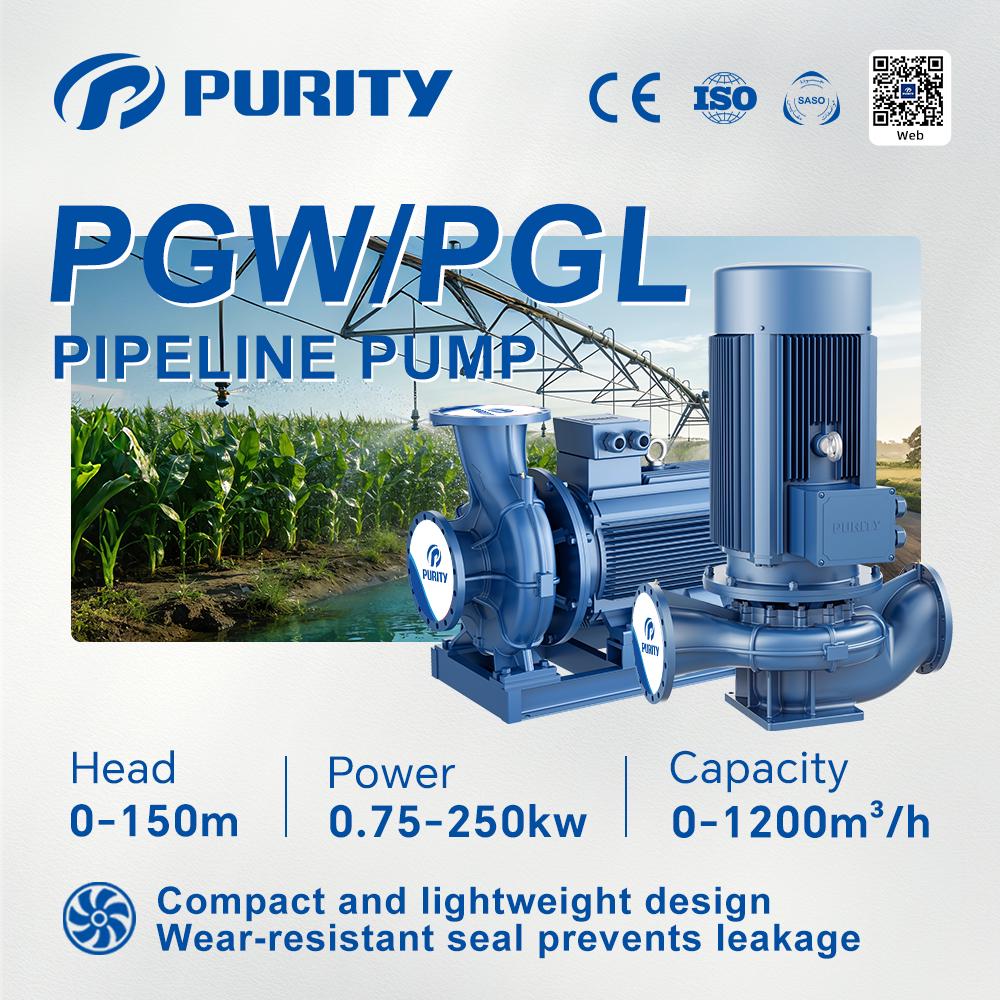
Picture|Purity PGL/PGW Pipeline Centrifugal Pump
For such applications, Purity PGL vertical pipeline centrifugal pump offers a practical solution. Its compact structure saves installation space, while the same-diameter inlet and outlet design allows easy connection to existing pipelines. Its coaxial pump-and-motor structure and balanced impeller help reduce vibration and noise, while the hard alloy and silicon carbide shaft seal enhances sealing reliability and durability.
Therefore, when choosing a vertical pipeline centrifugal pump, consider not only performance but also installation flexibility, operating stability, and sealing reliability for long-term operation.
Step 5: Choose a Reliable Water Pump Manufacturer
A malfunction in water pump equipment can disrupt normal production and lead to additional repair costs and economic losses. Therefore, selecting a reliable manufacturer is just as important as choosing the right pump itself.
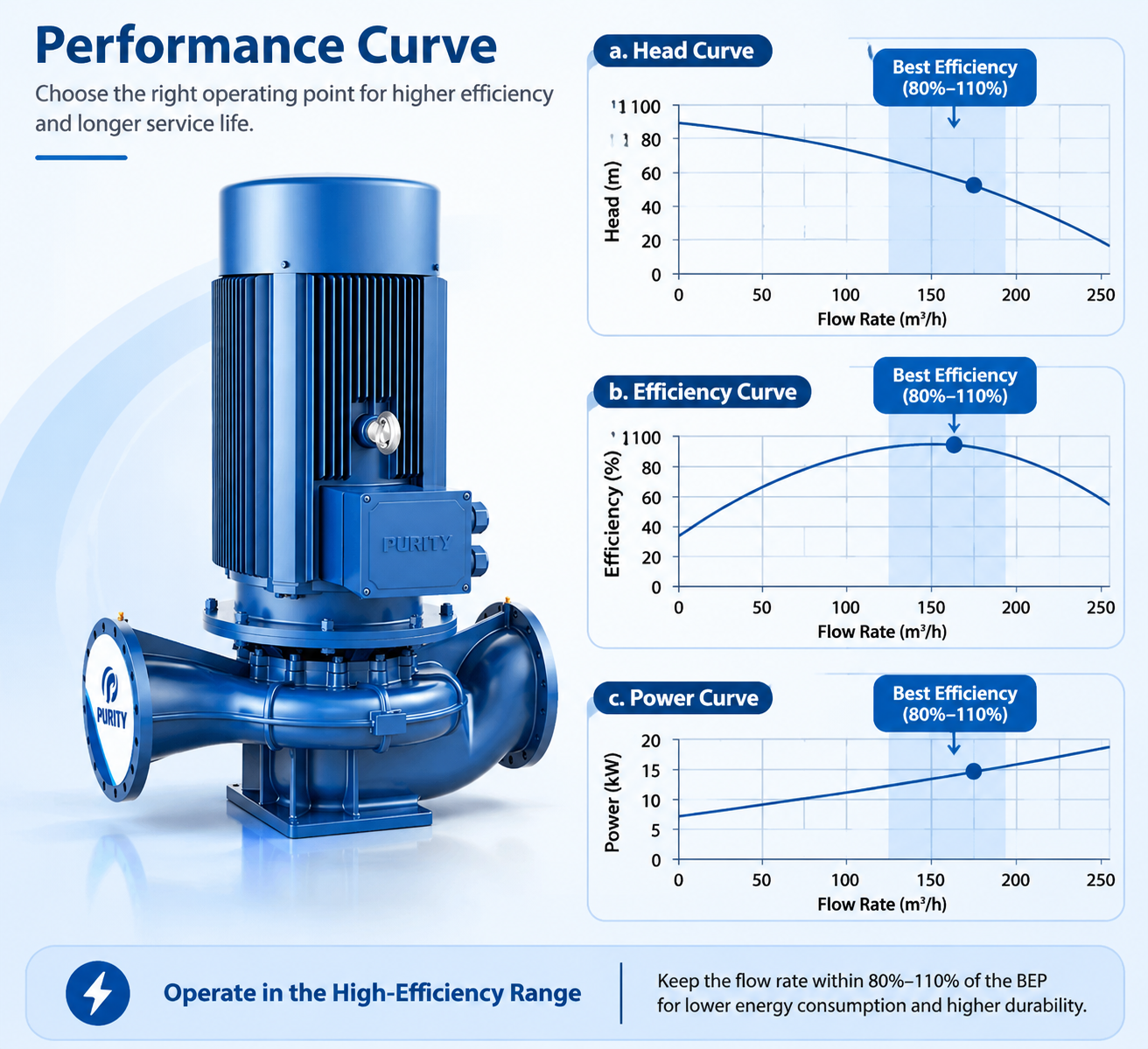
Picture|Pump Performance Curve
When evaluating manufacturers of inline or centrifugal pumps, consider the following key aspects:
Production Capacity: Assess the scale of the factory, production equipment, and the ability to handle bulk deliveries.
Quality Control: Examine product testing procedures, quality management systems, and relevant certifications.
Technical Support: Confirm whether the manufacturer provides professional guidance on pump selection, installation advice, and after-sales service.
Additionally, pay attention to product warranty policies, lead times, and emergency support capabilities. Be sure to clarify product specifications, delivery terms, and after-sales responsibilities before entering into a partnership.

Picture|Purity Factory
With over 16 years of experience in the production and sale of industrial pumps, Purity operates a 60,000㎡ manufacturing facility. Our products hold certifications such as CE, ISO, and SASO, and we possess over 130 certificates and patents. We remain committed to prioritizing product quality and customer needs, providing reliable water pump products and professional solutions to clients worldwide.
Purity is currently expanding its global presence and invites distributors and agents from all countries to join us in building a long-term, stable partnership.
A Simple Checklist for Selecting Industrial Water Pumps
When choosing an industrial water pump, keep the following key points in mind:
1.Determine the required flow rate and head (lift) for your system.
2.Understand the physical and chemical properties of the fluid being pumped.
3.Select appropriate materials for the pump casing and choose the right sealing solution.
4.Review the pump’s performance curve to evaluate its operating efficiency.
5.Consider the actual installation conditions and the ease of future maintenance.
6.Choose a manufacturer with reliable production capabilities and comprehensive after-sales support.
The most suitable water pump is not necessarily the one with the highest power or the lowest price; rather, it is the one that best matches your specific operating conditions, balancing efficiency with long-term ownership costs.
Follow Purity for more insights on industrial pump selection, applications, and maintenance—helping you make more professional equipment choices!
Post time: Nov-07-2026