
Many water pump failures, motor burnouts, leaks, and rising energy costs result from inadequate routine maintenance rather than equipment quality issues. Minor problems can gradually develop into major failures if left unnoticed. Regular inspections help identify potential risks early, reduce downtime, and extend equipment service life.
Here is a practical water pump maintenance checklist designed for most commonly used pump types.
1. Five Essential Daily Checks
1. Listen for Unusual Noises
A normally operating pump should run smoothly without abnormal noise. Metallic knocking, loud humming, or intermittent vibration may indicate impeller blockage, worn bearings, shaft misalignment, or cavitation. If unusual noises occur, stop the pump and investigate the cause promptly to prevent further damage.
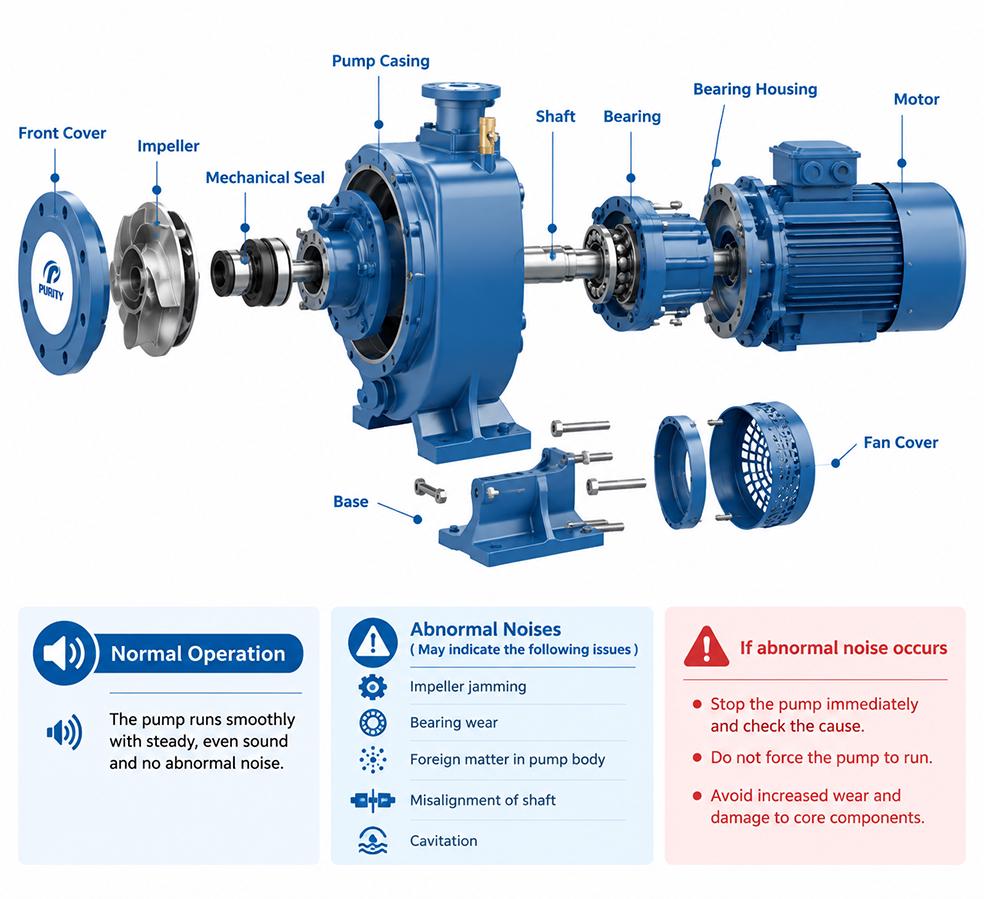
Picture | Diagnosis of Abnormal Noise in Industrial Pumps
2. Check Operating Temperature
Inspect the motor housing, bearing area, and mechanical seal. A slightly warm surface is generally normal, but rapid temperature increases or excessive heat may indicate motor overload, insufficient lubrication, poor ventilation, unstable voltage, or dry running. Shut down the pump if abnormal overheating occurs.
3. Inspect for Leaks
Check the pump casing, mechanical seal, and inlet and outlet pipe connections for dripping or water leakage. Even minor leaks can worsen over time, accelerate seal wear, and potentially allow water to reach electrical components. Prompt inspection and repair can help prevent more serious failures.
4. Monitor Vibration
Slight vibration is normal, but excessive shaking or noticeable movement may indicate loose foundation bolts, shaft misalignment, an unbalanced impeller, pipe stress, or an unstable base. Prolonged vibration accelerates bearing and seal wear and may damage pipes and connections.
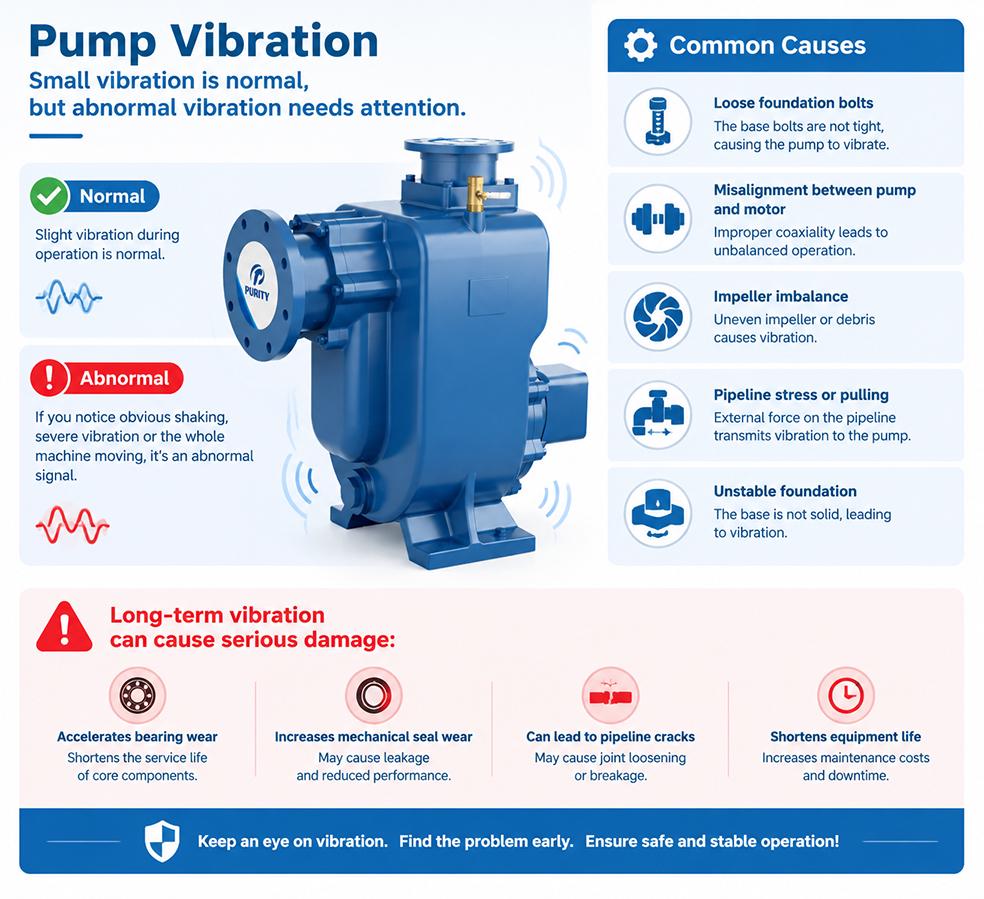
Picture | Safety and Maintenance Guide for Pump Vibration
5. Monitor Operating Parameters
Check pressure, flow rate, and motor current regularly. Sudden drops in pressure or flow may indicate inlet blockages, insufficient water supply, air entering the system, or cavitation. Excessive current may result from motor overload, impeller blockage, or voltage abnormalities. Investigating unusual readings early helps reduce energy waste and unexpected downtime.
2. Additional Maintenance Checks
1. Check Lubrication
As part of routine water pump maintenance, keep the oil level in oil-immersed pumps and pumps equipped with bearing housings within the specified range. Cloudy, milky, or contaminated oil may indicate water ingress or deterioration. Replace the oil according to the manufacturer’s maintenance requirements to help prevent excessive bearing wear.
2. Inspect Filters and Piping
Clean inlet filters regularly and check pipes for leaks, kinks, and blockages. In wastewater applications, regular sewage pump maintenance is essential because solid particles can accumulate inside the pump or obstruct the flow path. Regular cleaning and proper pump selection help ensure reliable operation.
The pump’s impeller design and discharge opening size can also affect solids handling and maintenance convenience. For example, the semi-open impeller and large discharge opening used in Purity PZW series sewage pumps help handle wastewater containing solid particles and make blockages easier to access during cleaning. Available in sizes ranging from 2 to 10 inches, the series offers options for different installation requirements. The appropriate model should be selected according to the solids size, wastewater properties, required flow rate and head, and piping connections.
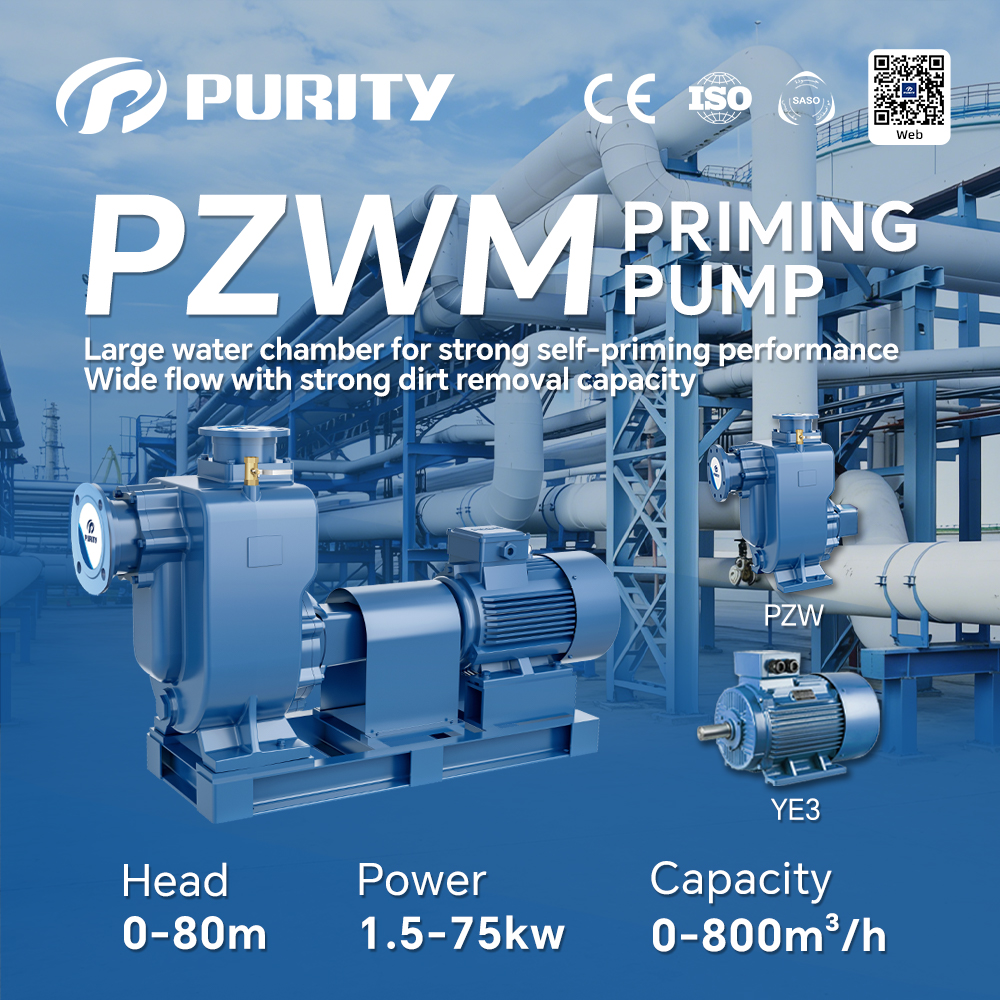
Picture |Purity PZWM Self-Priming Non-Clogging Sewage Pump
3. Check Electrical Components
During water pump inspection, check cables and junction boxes for damaged insulation, moisture, or water accumulation, especially in outdoor and humid environments. Always disconnect the power supply before maintenance, and ensure that electrical repairs are handled by qualified personnel.
4. Maintain a Suitable Operating Environment
Keep the pump area clean and well ventilated, with no debris blocking the motor’s cooling vents. Ensure submersible pumps maintain the required water level and take appropriate freeze-protection measures during winter to prevent damage to the pump casing and pipes.
3. Improve Reliability Through Routine Maintenance
Many pump failures develop gradually as minor issues go unnoticed. Spending a few minutes each day on routine inspections can help reduce repair costs, extend equipment life, and maintain stable water supply and drainage systems.
Proper pump selection is equally important. Considering operating conditions, performance requirements, and maintenance convenience alongside technical specifications helps minimize downtime and improve long-term efficiency.
About Purity Pump
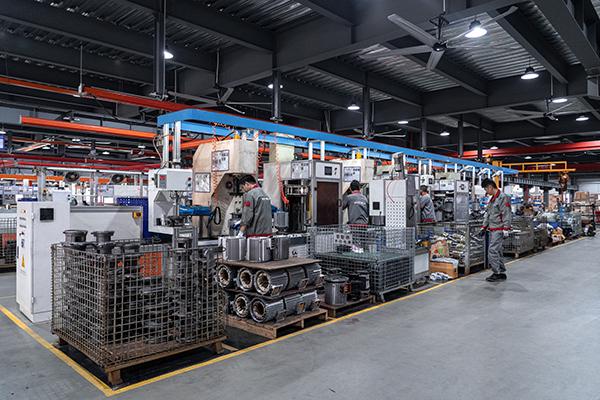
Picture | Purity Water Pump Production
Founded in 2010, Purity Pump specializes in the research, development, manufacturing, and sales of water pumps, including centrifugal pumps, sewage pumps, fire pumps, and water supply equipment. With a focus on product innovation, quality control, and manufacturing excellence, Purity offers more than 200 types of pump products to meet diverse application requirements. Serving customers in more than 140 countries and regions, the company is committed to providing reliable pumping products and practical water supply solutions for residential, commercial, industrial, and other applications.
Contact Purity to learn more about our products and distributor partnership opportunities.
Post time: Oct-30-2026


