
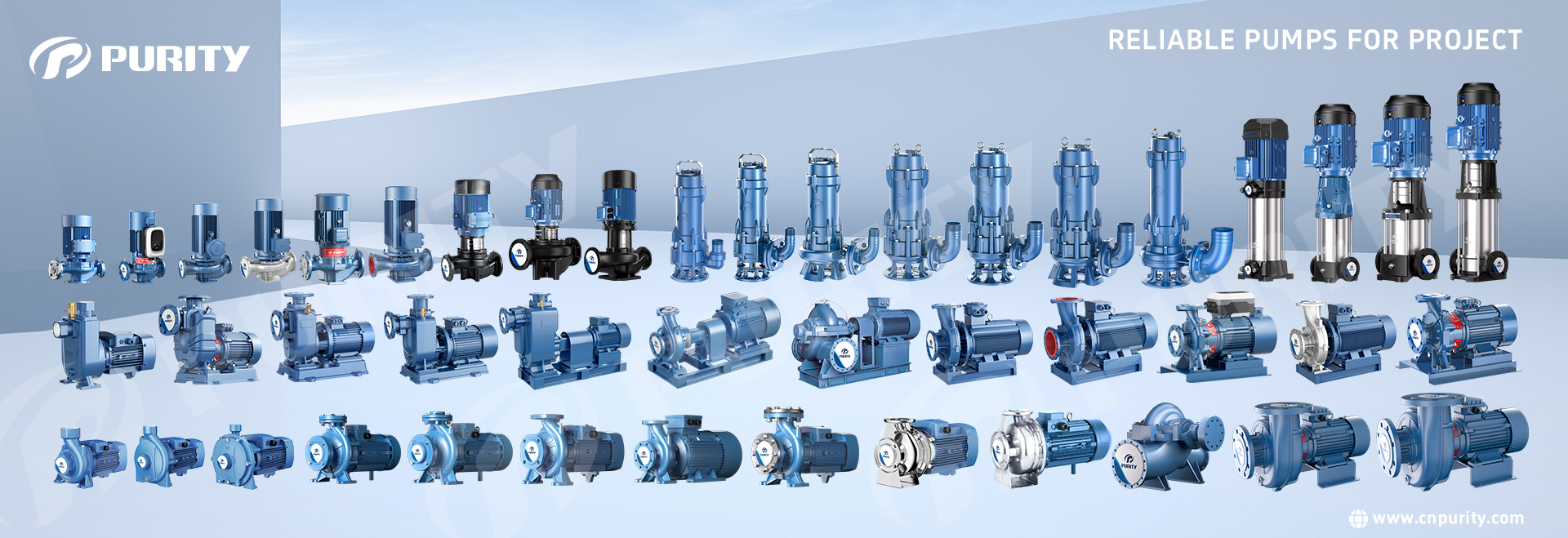
Picture | Purity Centrifugal Pump Family Portrait
In large-scale industrial and municipal projects, a centrifugal water pump is often the single largest consumer of electricity. Whether driving a municipal water supply system, a high-rise HVAC cooling tower, or a massive agricultural irrigation network, the performance of your pumping system directly dictates your operational bottom line.
However, selecting an industrial centrifugal pump isn’t just about matching a flow rate and a head pressure. The secret to long-term profitability lies in finding the “Sweet Spot”—known in engineering as the Best Efficiency Point (BEP). In this guide, we explore the technical essentials of centrifugal pump selection and how the right configuration can save your facility up to 40% in energy costs.
1. Understanding the BEP: The Engineering Heart of Your Budget
Picture | BEP
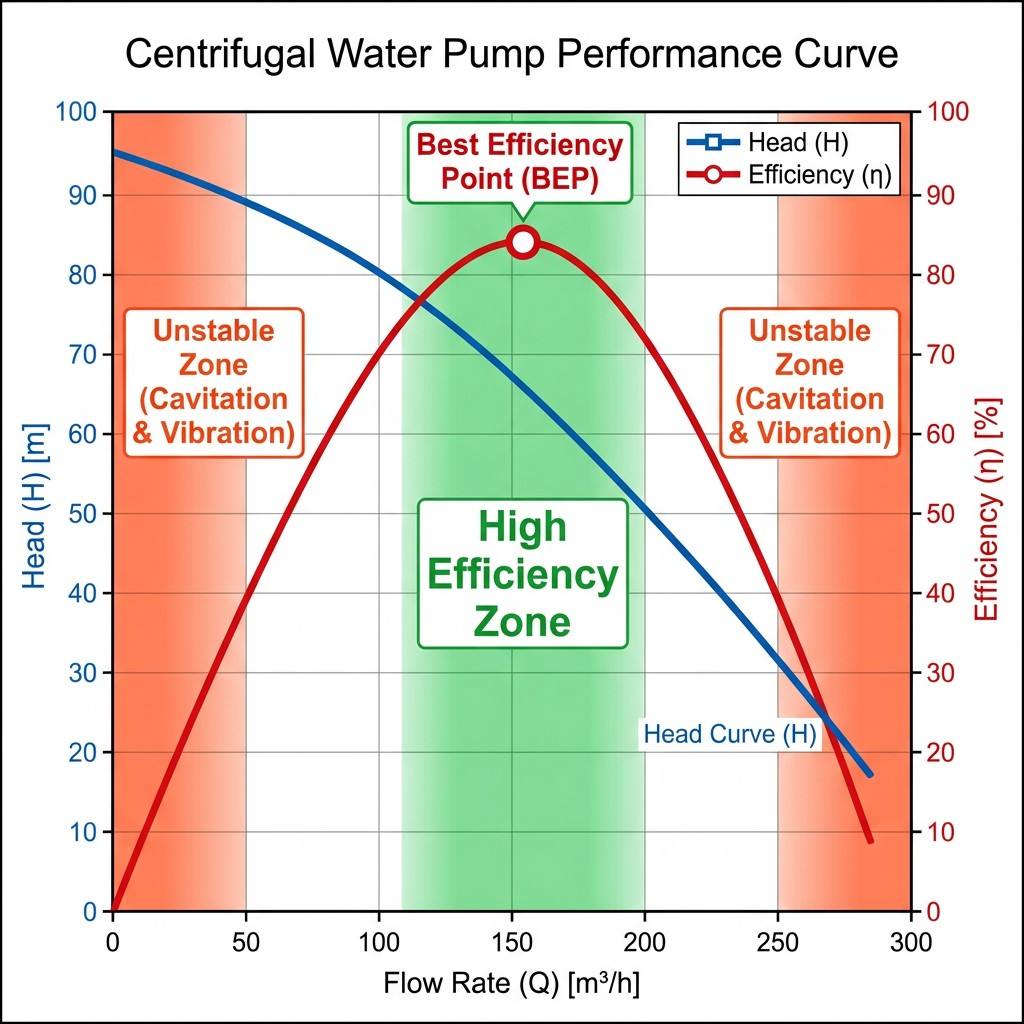
Every high-efficiency centrifugal pump is designed to operate most effectively at a specific combination of flow and pressure. This is the Best Efficiency Point (BEP). When a pump operates at its BEP, it achieves the highest hydraulic efficiency, converting the maximum amount of electrical energy into fluid movement.
Why Operating Near the BEP is Critical:
Minimized Energy Consumption: Motors run at peak performance, reducing kilowatt-hour waste.
Reduced Mechanical Stress: Radial loads on the impeller and shaft are at their lowest, preventing premature bearing and seal failure.
Plummeting Maintenance Costs: Systems running near the BEP significantly extend their Mean Time Between Failures (MTBF).
Conversely, operating too far from the BEP leads to turbulence, vibration, and cavitation—the “silent killers” of industrial machinery that cause internal erosion and unexpected downtime.
2. Selecting the Right Configuration for Your Application
As a leading centrifugal water pump manufacturer, we often see projects hindered by using the wrong pump architecture. Understanding the three primary configurations is essential for an optimized system:
End Suction Centrifugal Pumps
The “workhorse” of the industry. These pumps are versatile, cost-effective, and easy to maintain. They are the go-to choice for HVAC chilled water circulation, light industrial processing, and general water transfer.
Horizontal Split Case Pumps
When a project demands high flow rates—such as in municipal water supply systems or large-scale water treatment plants—the split case design is superior. Their dual-suction impeller balances hydraulic loads, allowing them to handle massive volumes of water with exceptional stability.
Multistage Centrifugal Pumps
For applications requiring high head (pressure)—such as feeding high-pressure boilers or moving water to the top of a skyscraper—multistage pumps are required. They use multiple impellers in series to generate the force needed for vertical water transport.
3. Key Selection Criteria: Beyond the Data Sheet
To ensure you procure a heavy-duty centrifugal pump that lasts for decades, your engineering team must evaluate four specialized factors:
1.NPSH (Net Positive Suction Head): You must ensure your system has enough suction pressure to prevent cavitation, which occurs when vapor bubbles form and collapse inside the pump.
2.Material Compatibility: Material choice is critical for longevity. While cast iron is standard for clean water, stainless steel or specialized alloys are required for corrosive or abrasive fluids.
3.VFD Compatibility: Modern energy-saving centrifugal pumps should be paired with Variable Frequency Drives (VFDs). This allows the pump to adjust its speed based on real-time demand, drastically reducing energy use during low-load periods.
4.Maintenance Accessibility: Can your team access the seals and impellers without dismantling the entire piping system? “Back pull-out” designs can save hundreds of man-hours over the pump’s lifecycle.
4. Elevate Your System with Purity Pump

Picture | Purity Company Profile
At Purity Pump, we provide more than just hardware; we provide optimized hydraulic solutions. Since our founding in 2010, we have grown into a global leader in the pumping industry.
Why Global Engineers Choose Purity Pump:
Extensive Product Range: From split case and end suction to multistage and vertical in-line pumps, we cover every industrial need.
Manufacturing Power: Our 60,000-square-meter independent factory produces over 150,000 units annually, ensuring rapid delivery and consistent quality.
Global Reach: With exports to over 130 countries, our pumps meet rigorous international standards and diverse environmental conditions.
Technical Consultation: Our engineering team provides performance curve analysis to ensure your pump is perfectly sized for its specific application.
Looking to optimize your facility’s energy footprint? Download our Centrifugal Pump Selection Guide or contact our technical consultants today for a free performance analysis of your current system.
Post time: Jun-24-2026


