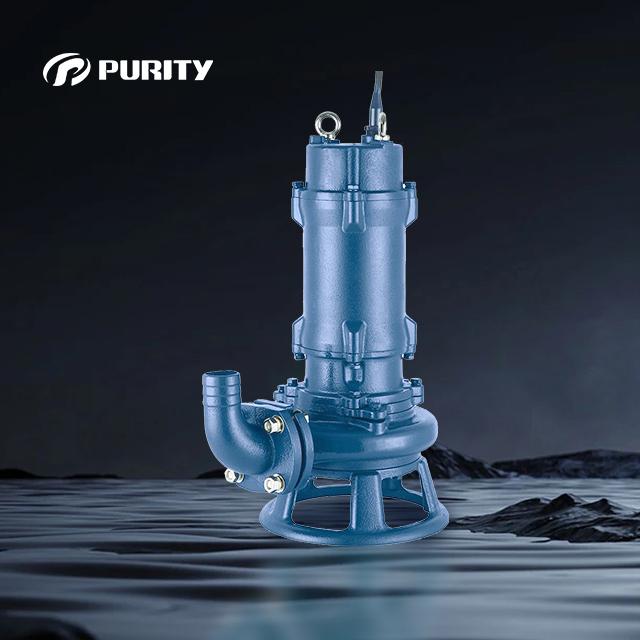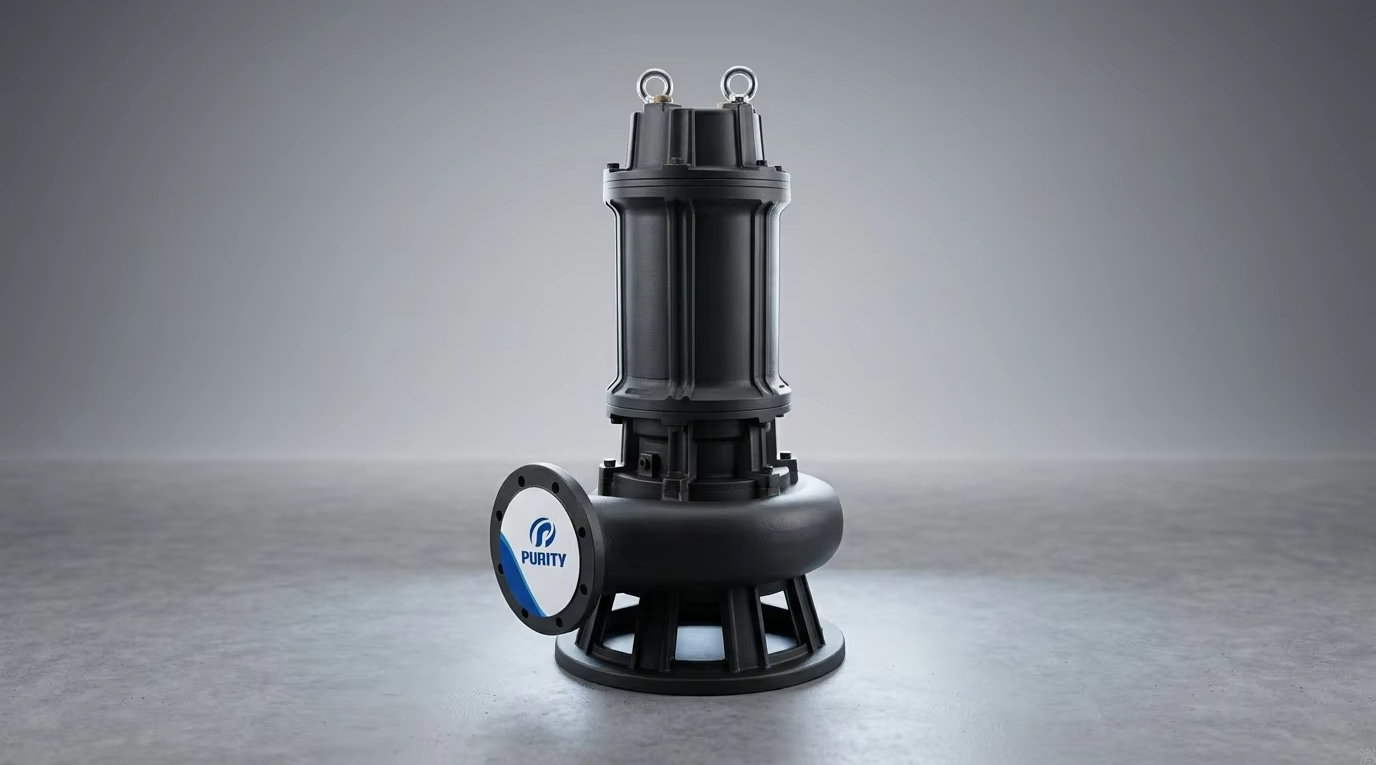
Picture | Purity WQV Vortex Submersible Sewage Pump
In the world of industrial infrastructure and municipal management, handling wastewater is one of the most demanding challenges. Unlike clean water systems, sewage contains a high concentration of solids, fibers, and corrosive materials that can easily damage standard pumping equipment. This is where the industrial submersible sewage pump steps in as the heavy-duty solution for modern waste management.
Whether you are managing a municipal wastewater treatment plant or a factory’s drainage system, understanding the science behind these pumps is essential for ensuring system longevity and operational efficiency. In this comprehensive guide, we will break down the core principles of sewage pumps and how to select the best technology to prevent costly system downtime.
1.How Does a Submersible Sewage Pump Work?
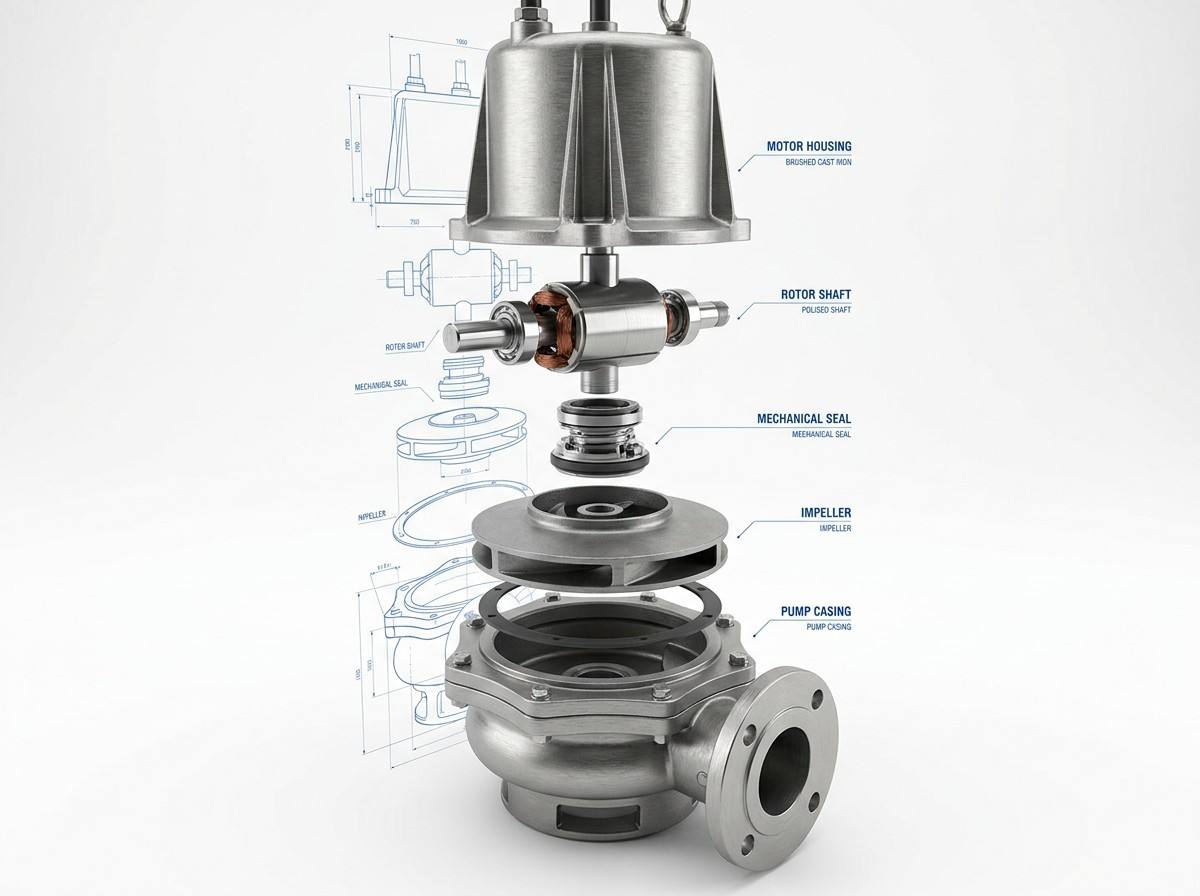 Picture | Vortex Submersible Sewage Pump 3D Anatomical Diagram
The primary mission of a submersible sewage pump is to transport fluids containing solids to a treatment facility or a septic tank. These pumps are designed to operate while fully submerged in the fluid.
The working principle is based on centrifugal force. As the motor drives the impeller to rotate at high speeds, the fluid is drawn into the pump’s suction inlet. The rotating impeller flings the liquid outward, creating kinetic energy that forces the sewage through the discharge outlet. Because the pump is submerged, it utilizes the surrounding fluid for cooling, allowing it to run for extended periods without overheating.
2.The Heart of the Pump: Choosing the Right Impeller
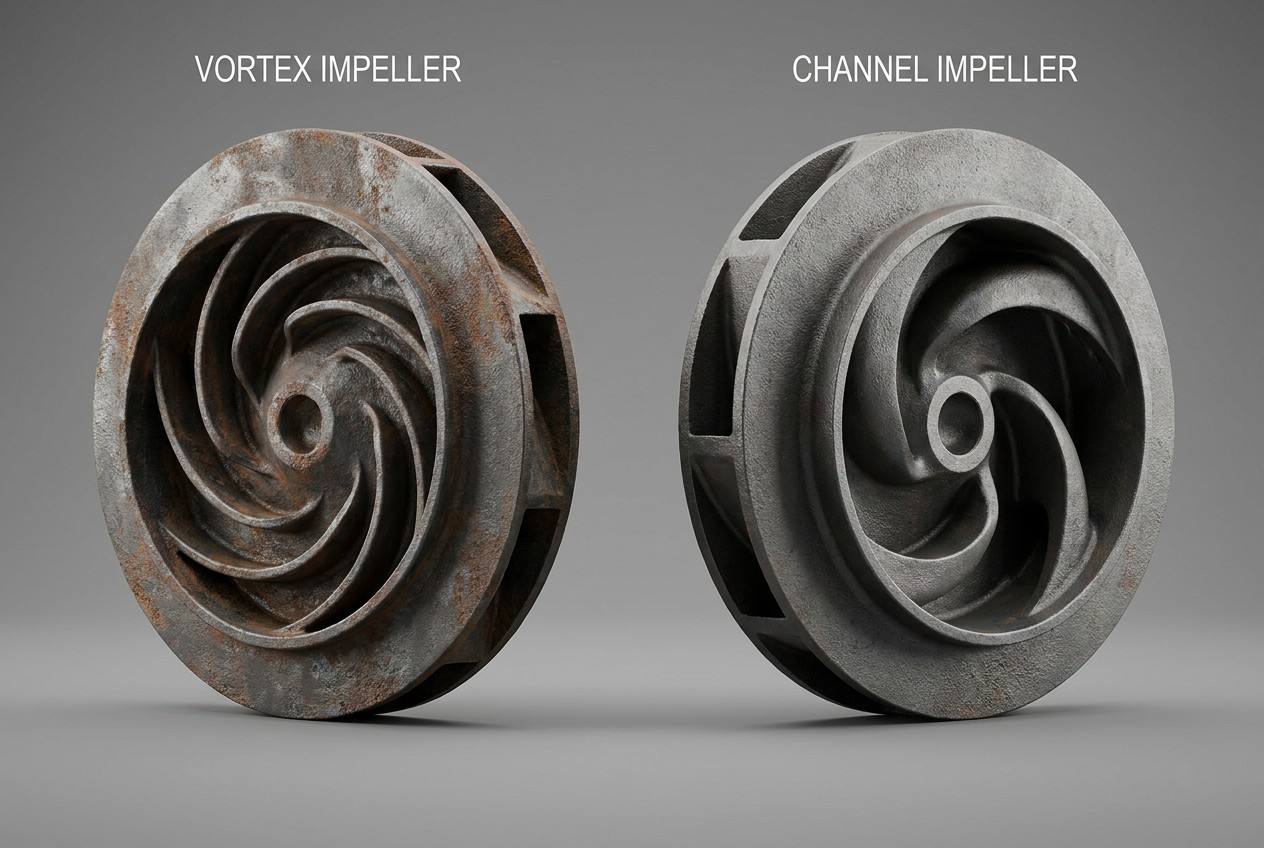 Picture | Vortex Impeller VS Channel Impeller
When it comes to wastewater, not all impellers are created equal. The impeller design determines a pump’s ability to handle solids without clogging. For industrial series like the Purity WQV series submersible sewage pump, two designs are most prominent:
Vortex Impellers (Recessed Impellers)
Vortex impellers sit recessed within the pump casing. Instead of directly touching the solid materials, they create a swirling “vortex” or whirlpool effect in the fluid. This vortex carries the solids through the pump without them ever coming into contact with the impeller blades. This is the ultimate non-clogging sewage pump design, ideal for fluids containing long fibers or high concentrations of stringy materials.
Semi-Open or Channel Impellers
Channel impellers are designed with large internal passages to allow big solids to pass through easily. They offer higher hydraulic efficiency compared to vortex impellers, making them suitable for large-scale municipal wastewater treatment pump stations where energy efficiency is a top priority.
3. Effluent Pump vs. Sewage Pump: What’s the Difference?
A common mistake in procurement is confusing effluent pumps with sewage pumps. While they look similar, their solid-handling capabilities differ significantly:
(1)Effluent Pumps: Designed to handle “greywater” or liquids containing small solids (usually less than 3/4 inch). They are typically used for pumping septic tank liquid.
(2)Sewage Pumps: Engineered for “blackwater” containing raw sewage and solids up to 2 inches or larger. Using an effluent pump where a sewage pump is required will lead to immediate clogging and motor failure.
4. Selection Criteria: Key Technical Specifications
To ensure your system operates at peak performance, engineering teams must evaluate three critical factors:
(1)Solid Handling Diameter: Ensure the pump can pass the largest solid likely to enter the system (e.g., 50mm or 80mm).
(2)Total Dynamic Head (TDH): The pump must have enough pressure to overcome vertical height and friction losses in the piping.
(3)Material of Construction: For corrosive industrial waste, cast iron or stainless steel components are essential for durability.
5. Frequently Asked Questions (FAQ) for Industrial Sewage Systems
Q: Why is my industrial sewage pump frequently clogging?
A: Frequent clogging is usually a result of an undersized pump or an incorrect impeller type for the specific solids in your waste stream. Switching to a vortex impeller or a pump with a larger solid-handling capacity often solves this issue.
Q: How often should a submersible wastewater pump be maintained?
A: In industrial environments, a quarterly inspection is recommended. Key maintenance tasks include checking the mechanical seal for leaks, testing motor insulation, and inspecting the impeller for wear.
Partner with Purity Pump for Reliable Waste Management
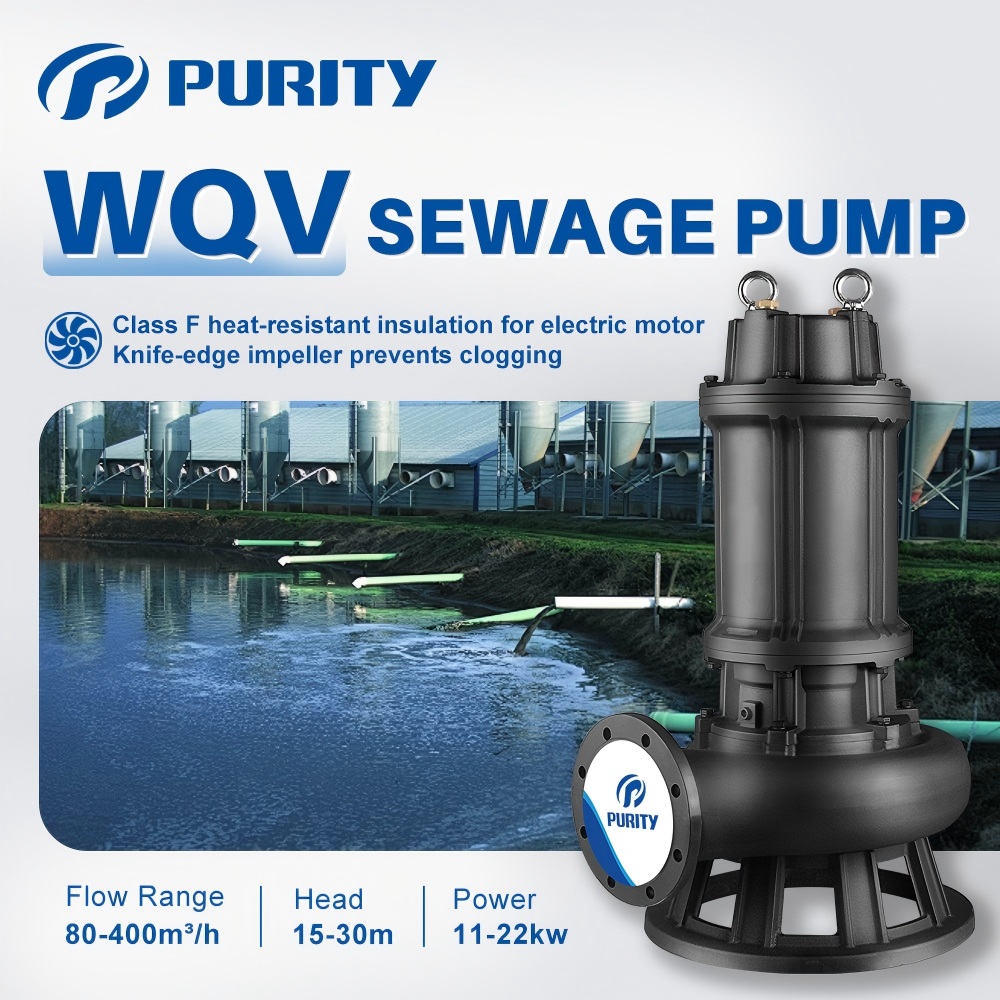
Picture | Purity WQV Vortex Submersible Sewage Pump
As a global leader in industrial sewage pump manufacturing, Purity Pump provides robust, energy-saving solutions like our WQV series to over 130 countries. Our pumps are engineered with advanced anti-clogging technology and heavy-duty mechanical seals to handle the toughest wastewater challenges.
Ready to upgrade your wastewater infrastructure? Contact Purity Pump’s technical experts today to request technical data sheets or a custom hydraulic consultation for your facility.
Post time: Jul-01-2026