
Mechanical seals play a critical role in ensuring the safe, efficient, and leak-free operation of centrifugal pumps. In modern industrial systems, selecting the correct sealing solution is not optional—it directly impacts pump reliability, service life, and maintenance costs. Understanding the types of mechanical seals used in centrifugal pumps is essential for engineers, operators, and procurement teams aiming for long-term stable performance.
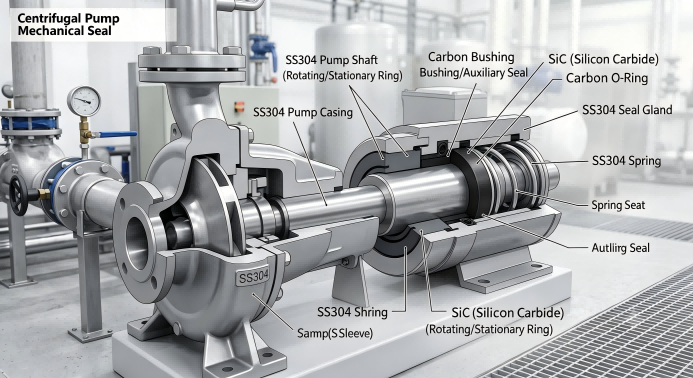
Picture|Mechanical Seals Used in Centrifugal Pumps
Why Mechanical Seals in Centrifugal Pumps Are Important
Mechanical seals in centrifugal pumps are designed to form a tight barrier between the rotating shaft and the pump casing. Their main function is to prevent fluid leakage while keeping external contaminants out of the pump system. Compared with traditional packing seals, mechanical seals centrifugal pumps applications offer higher durability, better efficiency, and lower maintenance requirements.
In real-world operation, centrifugal pumps often face pressure fluctuations, shaft deflection, vibration, and temperature changes. Improper seal selection or system design can quickly lead to leakage, overheating, and unexpected downtime.
As a centrifugal pump manufacturer with over 16 years of experience, Purity (Purity Pump) focuses on optimizing pump structure and sealing compatibility to improve overall system stability and extend mechanical seal life in different industrial applications.
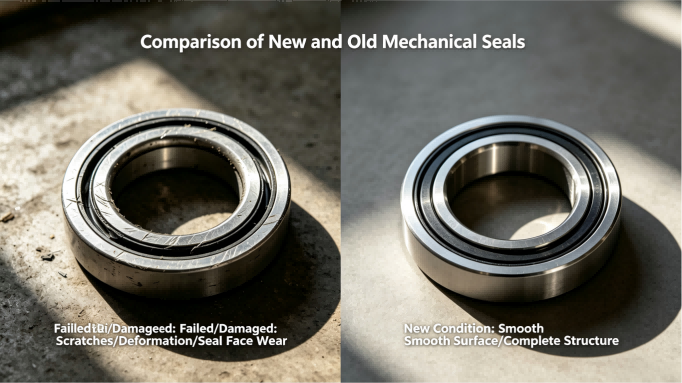
Picture| Comparison Chart
Working Principle of Mechanical Seals
Mechanical seals typically consist of two highly polished sealing faces—one rotating with the shaft and one stationary in the pump housing. These faces are pressed together by spring force and hydraulic pressure, forming a controlled sealing film.
During operation, a thin lubricating film forms between the seal faces to reduce friction and wear. If this film is disrupted, seal failure may occur. Therefore, correct selection and stable operating conditions are essential for all mechanical seals in centrifugal pumps systems.
Purity Pump improves seal performance by optimizing hydraulic design, reducing vibration, and minimizing shaft deflection, which helps reduce mechanical stress on sealing components and enhances overall reliability.
Types of Mechanical Seals Used in Centrifugal Pumps
There are several types of mechanical seals used in centrifugal pumps, each designed for specific operating conditions, fluid characteristics, and pressure levels.
1. Balanced Mechanical Seals
Balanced seals reduce hydraulic force acting on the seal faces, resulting in lower heat generation and longer service life. They are ideal for high-pressure, high-temperature, or low-lubricity applications and are widely used in demanding industrial systems.
2. Unbalanced Mechanical Seals
Unbalanced seals feature a simpler structure and lower cost. They are suitable for low to medium pressure applications but generally have a shorter service life compared to balanced designs.
3. Pusher Mechanical Seals
Pusher seals use springs to maintain face contact. They are widely used in general industrial applications and can handle moderate to high pressures. However, elastomer components may experience wear over time.
4. Non-Pusher Mechanical Seals
Non-pusher seals use bellows instead of springs to maintain sealing force. They perform well in high-temperature and contaminated fluid environments but are typically limited to low and medium pressure conditions.
5. Component Mechanical Seals
Component seals consist of separate parts assembled directly into the pump. While cost-effective, they require high installation skill, and improper assembly is a common cause of failure in mechanical seals centrifugal pumps systems.
6. Cartridge Mechanical Seals
Cartridge seals are pre-assembled, integrated units designed for easy installation. They significantly reduce installation errors and improve reliability, making them one of the most widely used modern sealing solutions in centrifugal pumps.
7. Double Mechanical Seals
Double seals are used in hazardous, toxic, or high-value fluid applications. With two sealing barriers working together, they provide enhanced safety and minimize leakage risk.
Key Factors in Seal Selection
Proper seal selection must consider multiple operating conditions rather than a single parameter:
- · Fluid characteristics (corrosiveness, solids content, viscosity, lubricity)
- · Operating pressure and temperature
- · Pump configuration and speed
- · Safety and environmental requirements
Incorrect selection is one of the leading causes of failure in mechanical seals in centrifugal pumps.
Lifecycle Management Matters
Even the best mechanical seal can fail without proper installation and maintenance. Key practices include:
- · Correct installation and shaft alignment
- · Clean operating environment
- · Stable lubrication film maintenance
- · Regular inspection and replacement
From a system perspective, seal reliability depends not only on the seal itself but also on pump design quality and manufacturing precision. Purity Pump ensures consistent pump-seal compatibility through standardized production processes and factory testing, reducing leakage risk at the source.
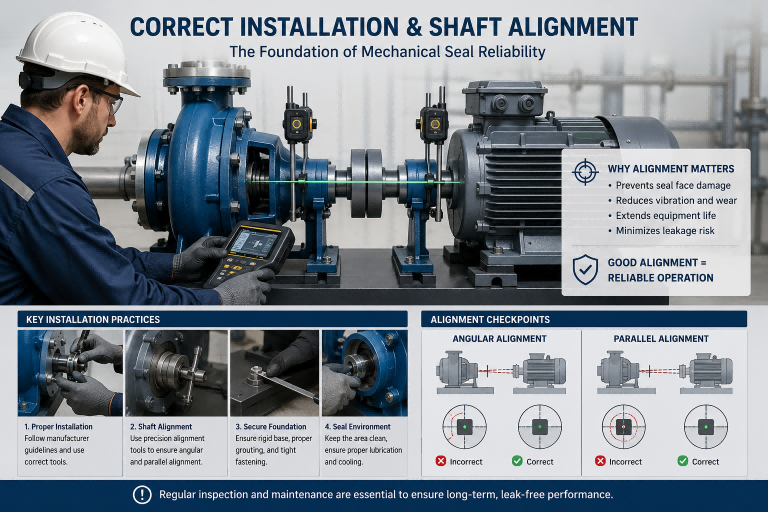
Picture|Shaft Alignment / Installation Specifications — Scenario Diagram
Conclusion
In summary, the types of mechanical seals used in centrifugal pumps vary significantly depending on application requirements. There is no universal solution—each seal type serves a specific operational condition.
Reliable pump performance depends on a system engineering approach: correct selection, proper installation, and continuous maintenance. Only when these three factors work together can centrifugal pumps achieve stable, efficient, and long-lasting operation.
Choosing a reliable manufacturer is also critical. Purity Pump, with exports to over 130 countries and a fully equipped 60,000 m² manufacturing facility, provides engineered centrifugal pump solutions with optimized sealing compatibility. This helps customers achieve higher reliability, longer service life, and more stable system performance across global industrial applications.
Post time: Jun-03-2026

