
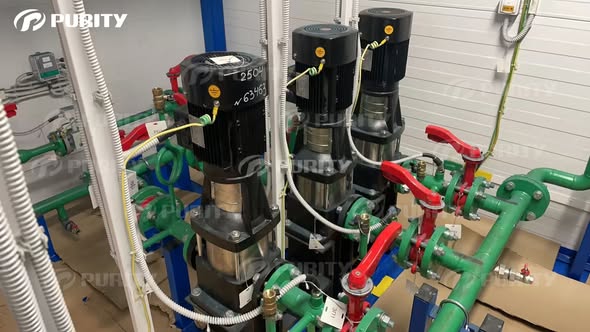
Picture | Purity Vertical Circulating Centrifugal Pump PTD
What Is a Centrifugal Pump?
A centrifugal pump moves liquid by converting the rotational energy of a spinning impeller into flow and pressure. Liquid enters the impeller eye, is flung outward by the vanes, and the volute converts that velocity into pressure. It is simple, high-flow and low-maintenance — the world’s most widely used pump type, powering water supply, irrigation, sewage and fire protection.
How Does a Centrifugal Pump Work?
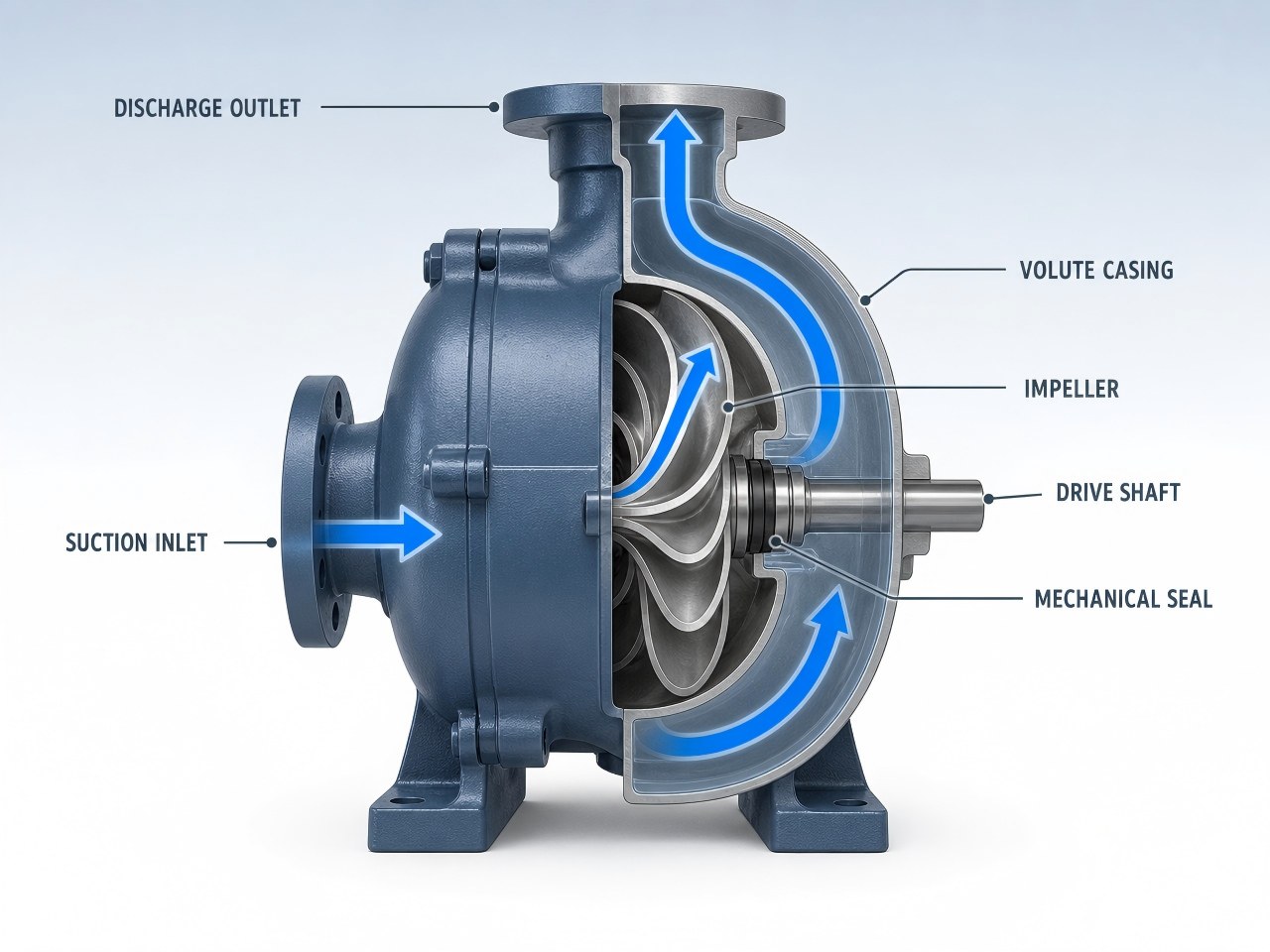 Picture | Centrifugal pump Impeller
One essential moving part — the impeller — spins inside a volute casing. The process runs in five steps:
Priming — the casing must be filled with liquid; a gas-filled pump becomes “gas-bound” and stops.
Suction — spinning throws liquid outward; a low-pressure zone at the eye draws in more liquid.
Acceleration — the vanes fling liquid outward; velocity and pressure rise.
Pressure conversion — the volute slows the liquid, turning kinetic energy into pressure.
Discharge — pressurized liquid leaves through the discharge nozzle.
Two principles matter: a pump creates flow, not pressure — the discharge gauge measures pipework resistance — and head is constant: the same pump lifts water or oil to the same height; only power changes with density. By the affinity laws, halving speed cuts power to one-eighth.
Main Types of Centrifugal Pumps
| Type | Best for |
| Single-stage end suction | General water transfer, irrigation |
| Multistage | High head: boiler feed, high-rise supply, fire jockey pumps |
| Double-impeller (two-stage) | Medium-high head in a compact footprint |
| Close-coupled | Space-constrained pump rooms, OEM equipment |
| Self-priming | Suction-lift duty, tanker unloading, dewatering |
| Stainless steel (304/316) | Corrosive fluids, food, pharmaceutical |
| Magnetic drive (sealless) | Hazardous or toxic chemicals |
Rule of thumb: one impeller = one pressure stage. More head? Add stages. More flow? Use a larger or parallel pump.
Key Terms You Need to Know
Flow (Q) — volume moved per hour (m³/h or GPM).
Head (H) — the height the pump can lift liquid, in meters; independent of fluid density.
NPSH — suction pressure above the liquid’s vapor pressure. When NPSHa falls below NPSHr, cavitation erodes the impeller.
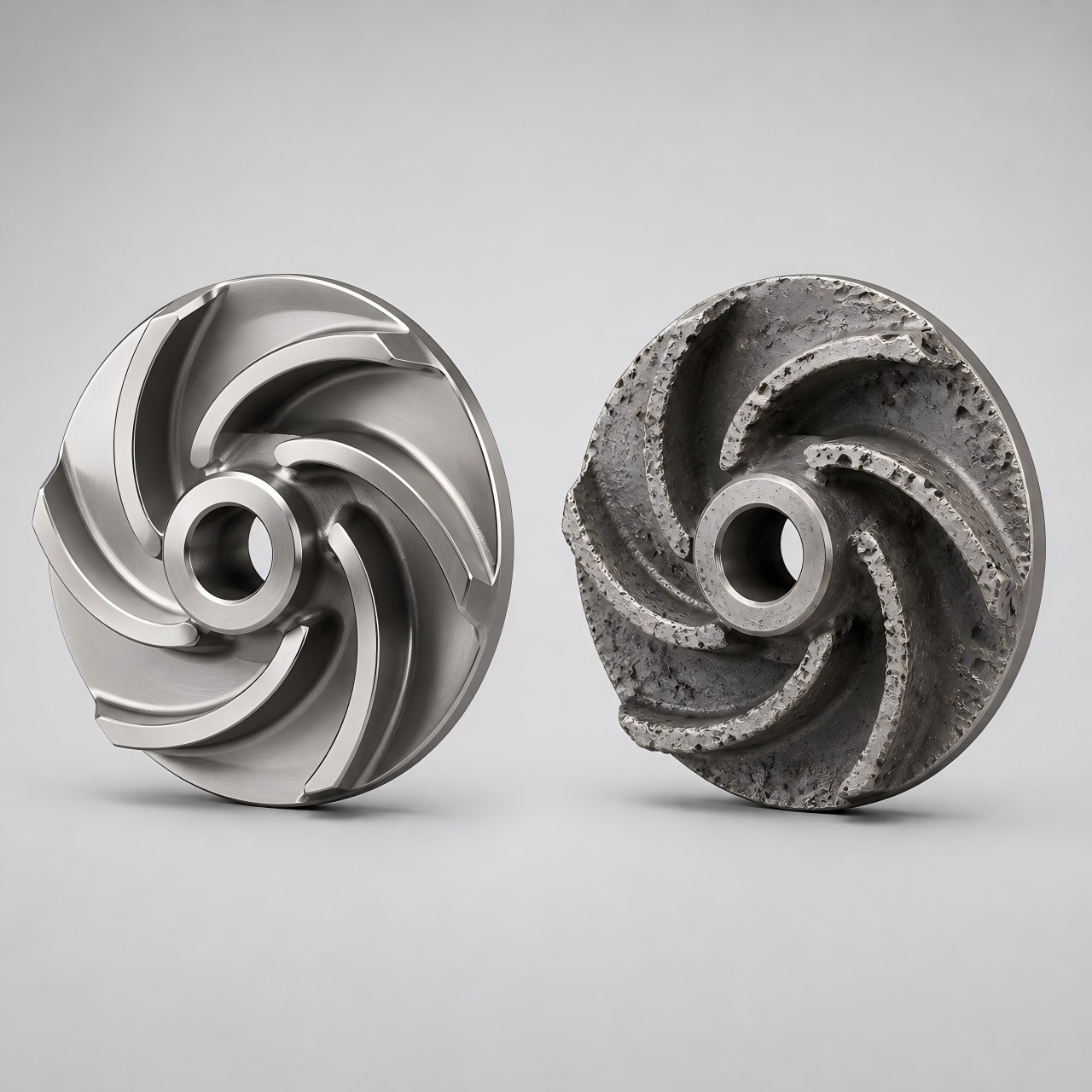 Picture |Impeller Comparison
BEP — the flow at maximum efficiency; running far from it wastes energy.
Pump curve — head vs. flow at a given speed; it must intersect the system curve.
How to Choose a Centrifugal Pump?
Define flow and head first — never oversize; oversized pumps waste energy.
Check the NPSH margin — keep NPSHa at least 0.5–1 m above NPSHr.
Know your fluid — viscosity, solids and corrosiveness change impeller and material choices.
Choose materials — cast iron is the default; 304/316 stainless for aggressive water and chemicals.
Verify certifications — fire and export markets often require UL, CE, SASO, CCC or CCCF.
Work with a manufacturer — a competent pump maker checks your duty point against the curve and verifies NPSH. Our engineers at Purity Pump do exactly this before quoting.
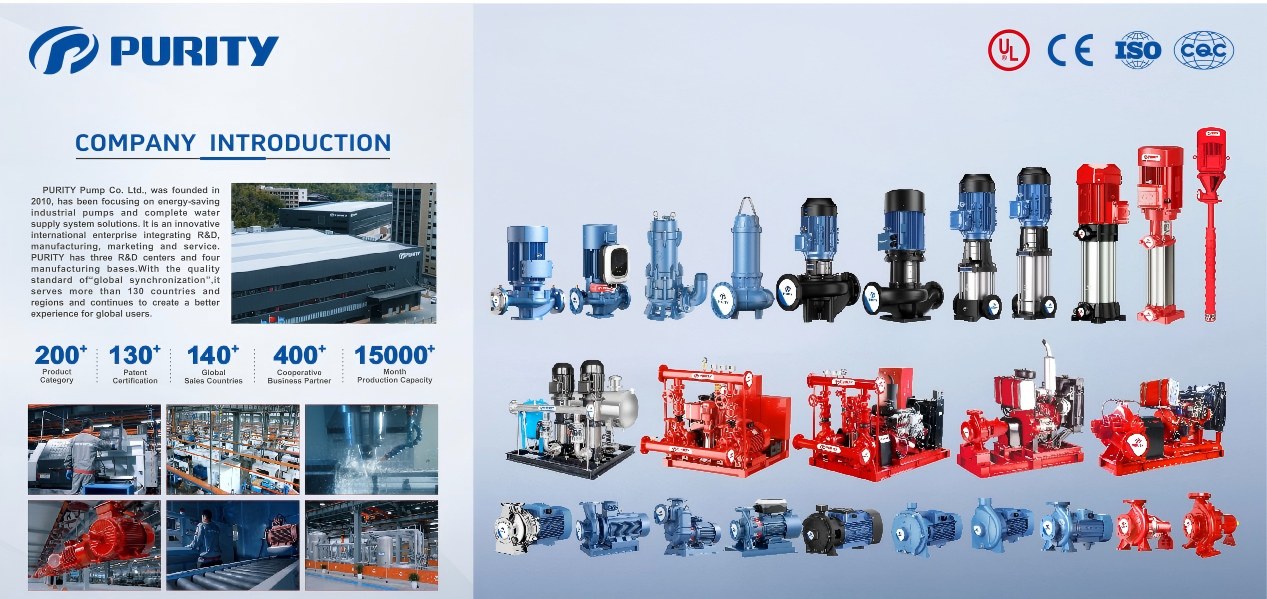 Picture | Purity Company Profile
Common Applications
Centrifugal pumps dominate municipal water supply, fire protection, agricultural irrigation, sewage, HVAC and boiler feed. At Purity Pump, six product series — end-suction centrifugal pumps (PSM), double-impeller pumps (P2C) and stainless steel pumps (PZ) — have served 130+ countries since 2010, including the National Olympic Stadium.
Common Problems and How to Prevent Them
Cavitation — gravel-crunching noise and vibration; raise NPSHa or choose a lower-NPSHr pump.
Dry running — destroys the seal in minutes; fit dry-run protection.
Seal leakage — usually from dry running or abrasives; replace wear parts promptly.
Low-flow operation — recirculation causes overheating; install a minimum-flow bypass.
Loss of prime — air enters the suction line; check joints and strainers.
Log vibration and current monthly; a well-maintained pump runs 15–20 years in clean-water duty.
Frequently Asked Questions
Can a centrifugal pump run dry? No. Liquid lubricates and cools the seal; even minutes of dry running destroy it.
What does NPSH mean? Suction pressure above the liquid’s vapor pressure. If NPSHa falls below NPSHr, vapor bubbles collapse inside the impeller — cavitation — eroding the metal.
Single-stage or multistage? Single-stage delivers high flow at moderate head (~100 m); multistage stacks impellers for high head — high-rise buildings, boiler feed, fire jockey pumps.
Do centrifugal pumps need priming? Most need filling with liquid before starting; for suction-lift duty choose a self-priming pump or foot valve.
What is the difference between head and pressure? Head is the liquid-column height, independent of density; pressure = head × density × gravity. That is why curves use head.
How do I prevent cavitation? Increase NPSHa: lower the pump, enlarge suction pipework, or choose a lower-NPSHr pump. Never throttle the suction side.
Post time: Aug-29-2026
